In hospitality, guest relationships are no longer managed only through a warm welcome and good service on site. Reviews, repeat stays, and personalization now influence revenue just as much as location, price, or room quality. In this context, a CRM (Customer Relationship Management) system becomes a practical tool for hotels, B&Bs, and vacation rentals that want to create stronger relationships, improve communication across the full guest journey, and increase direct bookings. A CRM helps properties turn scattered interactions into a consistent strategy, so every message and every touchpoint feels intentional, timely, and relevant.
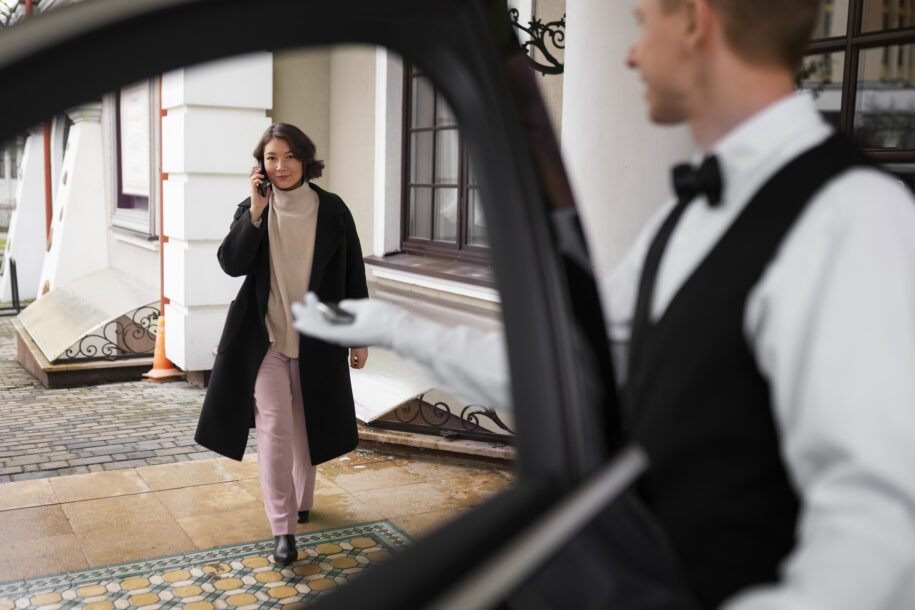
Baggysitter fits into the same experience-first approach. It’s a door-to-door luggage pick-up and delivery service: a driver collects luggage at the airport, train station, or anywhere in the city and delivers it directly to a hotel, B&B, private home, or any chosen address—then handles the reverse on departure. For guests, this removes friction at the most delicate moments of the stay, especially when they arrive early or leave late. For properties, it can be a complementary service that strengthens the welcome and reduces operational stress around storage, timing, and guest logistics. In the same way a CRM makes relationships more structured and valuable, services like Baggysitter can make the overall journey smoother, more premium, and easier to manage.
INDEX
- What a CRM is and why it matters in hospitality
- How a Customer Relationship Management system works
- The concrete benefits of a CRM for hotels and B&Bs
- Key CRM features in the hospitality sector
- CRM and PMS: why integration changes everything
- Data and personalization: the heart of the guest experience
- How to choose the right CRM for your property
- Mistakes to avoid when using a CRM
- Staff training and system adoption
- The most widely used CRMs in the hospitality sector
- CRM as a lever for revenue and marketing performance
- The future of digital guest relationships
1. What a CRM is and why it matters in hospitality
CRM stands for Customer Relationship Management. In hospitality, it refers to a system that helps manage every interaction with a guest in a structured way—before arrival, during the stay, and after departure. This includes collecting and organizing guest data, tracking conversations and preferences, and using that information to improve service and communication. The objective is not to “send more messages,” but to build better relationships through more relevant timing, clearer personalization, and a consistent tone across channels.
When configured properly, a CRM becomes a strategic memory for the property. It stores preferences, stay history, booking habits, feedback, and communication logs. This is valuable because hospitality teams often work under pressure, staff turnover is common, and information can be lost between shifts. With a CRM, knowledge stays inside the business. That makes the guest experience more consistent and increases the probability of repeat bookings. In a market where competition is intense and OTA dependency can reduce margins, long-term relationships are one of the strongest strategic advantages.
2. How a Customer Relationship Management system works
A CRM centralizes data from different touchpoints: website forms, direct emails, OTA reservations, phone calls, social interactions, and in-stay conversations. Each contact is linked to a guest profile, which is updated over time as new information becomes available. This creates a clear view of the guest journey and allows the property to understand not only what a guest booked, but also how they behave, what they value, and what communication they respond to.
Most CRM strategies are based on three connected pillars. First, data collection: capturing information across all guest touchpoints, including booking channel, stay dates, spend, preferences, and feedback. Second, analysis: segmenting guests based on behavior, value, and interests, so the property can distinguish between a first-time weekend traveler, a returning business guest, or a high-value couple booking special occasions. Third, action: using those segments to send targeted messages and campaigns at the right moment, such as pre-arrival instructions, upsell offers, post-stay review requests, and reactivation emails for past guests.
More advanced CRM systems integrate with a PMS, booking engines, and channel tools. This allows a continuous data flow, so communication can be based on real-time events, not manual updates. The result is a system that helps properties manage relationships with the same operational discipline they use for availability and payments.
3. The concrete benefits of a CRM for hotels and B&Bs
A CRM delivers value both operationally and commercially. Operationally, it reduces the daily friction of communication management by organizing contacts, standardizing workflows, and keeping information accessible to the team. Commercially, it helps protect margins by increasing direct bookings, improving repeat rate, and making marketing more efficient. Instead of sending generic promotions to everyone, a property can send fewer messages that convert better because they are more relevant.
The benefits are visible in multiple areas. Guest communication becomes more targeted, because offers and messages reflect real preferences. Direct bookings can increase over time, because guests feel connected to the property rather than only to an OTA interface. Loyalty improves, because recognition and personalization create continuity across stays. Reputation can also improve, because smoother experiences lead to better reviews and review requests can be triggered at the right moment. Over time, a CRM becomes less of a “tool” and more of a relationship engine that strengthens brand identity and competitiveness.
4. Key CRM features in the hospitality sector
A CRM designed for hospitality should go beyond basic contact storage. A robust guest database should include stay history, preferences, notes, and value indicators, so the team can personalize service without relying on memory. Automation is another core feature: pre-arrival emails, check-in guidance, in-stay messages, post-stay follow-ups, and review requests can be triggered based on booking events or guest segments. This makes communication consistent even when the team is busy.
A good hospitality CRM also supports lead and booking management, especially for properties that receive inquiries before confirmation. Behavioral segmentation helps identify high-value guests, frequent returners, and segments that respond better to specific offers. Reporting and analytics are essential to improve performance: open rates, conversions, direct booking uplift, and campaign ROI should be measurable. Finally, integrations matter. Syncing with PMS, booking engines, and marketing tools reduces manual work and keeps data accurate, which is what makes the system sustainable long term.
5. CRM and PMS: why integration changes everything
A CRM performs best when it works in synergy with the PMS. The PMS manages internal operations such as availability, room assignment, check-in and check-out, and payments. The CRM focuses on the relationship layer: communication, segmentation, loyalty, and marketing performance. Connecting these systems creates continuity, because guest data stays aligned across operations and marketing.
Integration enables properties to automate key moments in the guest journey. Confirmations, pre-arrival messages, upsells, and post-stay follow-ups can be triggered automatically and updated based on real-time events such as extensions, upgrades, or cancellations. It also prevents outdated data from driving wrong communication, which is one of the fastest ways to create guest frustration. When CRM and PMS work together, every interaction can feel consistent—from the first touchpoint to long-term loyalty—without increasing workload for the team.
6. Data and personalization: the heart of the guest experience
The real value of a CRM is personalization that feels useful, not intrusive. Guest data can help properties anticipate needs and deliver relevant offers at the right time. Personalization can start simple: recognizing returning guests, remembering preferences, and tailoring pre-arrival communication. Over time, it can become more refined: specific room suggestions, add-on services aligned with guest behavior, and seasonal offers timed around past stay patterns.
A guest who booked a suite for an anniversary may respond well to a similar offer the following year. A business traveler may value speed and clarity, so messaging should focus on frictionless check-in and practical information. Families might respond better to packages and timing-based promotions. When personalization is based on real behavior, it increases perceived quality and drives higher conversion. In today’s market, personalization is also a selection factor, especially for guests choosing between similar properties.
7. How to choose the right CRM for your property
Choosing the right CRM depends on your property’s goals, size, and operational complexity. Ease of use is fundamental: if the interface is not intuitive, adoption will be slow and the CRM will remain underused. Integration is equally important: the CRM must connect smoothly with your PMS, booking engine, channel tools, and email marketing workflow. Scalability matters too, because a system that works today should still work when your operations grow or when you add more properties.
Support quality is often underestimated. Fast assistance in Italian can be decisive when issues happen in peak season. Pricing should be evaluated realistically, considering what is included and what becomes an add-on later, such as advanced segmentation, automation modules, or integrations. A demo is essential, but the most useful test is a scenario-based evaluation: try real workflows like pre-arrival messages, segmentation for returning guests, and post-stay follow-ups, and measure how easy it is for the team.
8. Mistakes to avoid when using a CRM
A CRM can become counterproductive if it is treated as a mass messaging tool instead of a relationship tool. One common mistake is poor data maintenance: if profiles are incomplete or outdated, personalization becomes inaccurate and trust in the system decreases. Another mistake is sending communication too frequently or without relevance, which creates unsubscribes and weakens brand perception. Lack of segmentation is also a major issue, because it forces generic campaigns that rarely perform well.
Another frequent mistake is ignoring reporting. If you don’t measure what works, the CRM becomes a routine instead of a performance driver. The best approach is to maintain a balance between automation and personalization. Automation should support the relationship, not replace it. Start with simple, high-impact workflows, test performance, refine segments, and build a communication cadence that respects guest attention.
9. Staff training and system adoption
CRM success depends on adoption across the team. A CRM used by only one person will not create consistent outcomes, because guest data and communication need shared processes. Training is not only about learning the tool, but also about understanding why the tool matters. Staff should know what data to collect, how to write useful notes, and how to use profiles to improve service and communication.
The best providers support adoption with onboarding sessions, templates, documentation, and ongoing webinars. Properties should also set internal rules to avoid inconsistency: define what fields are mandatory, how guest preferences are recorded, and how campaigns are approved. A well-trained team reduces errors, improves productivity, and delivers more consistent service. Over time, this consistency becomes visible to guests and contributes to satisfaction and loyalty.
10. The most widely used CRMs in the hospitality sector
The hospitality market includes specialized CRMs and broader enterprise platforms. Some solutions focus strongly on guest communication and reputation, while others offer deep customization and integration with wider business systems. The best choice depends on the type of property, guest volume, and operational goals.
For independent hotels and B&Bs, usability and automation are often priorities. For larger properties or groups, advanced segmentation, permissions, and reporting can matter more. In Italy, some providers are part of wider management ecosystems, which can be attractive if you prefer a unified vendor approach. The key is selecting a CRM that fits your workflow and integrates cleanly with your PMS and marketing stack.
11. CRM as a lever for revenue and marketing performance
A CRM improves relationships, but it also improves revenue performance. With structured data, properties can identify high-value segments, reduce OTA dependency, and increase direct bookings through targeted campaigns. Instead of sending one generic offer, you can send different communication to different audiences: returning guests, business travelers, couples booking special occasions, families, or long-stay guests. This improves conversion because relevance increases.
CRM insights also support better commercial decisions. Booking behavior, response to promotions, and seasonal patterns help refine marketing timing and offer design. The link between CRM and digital marketing makes communication more efficient: fewer messages can create better results. Over time, this builds a more resilient acquisition model, where repeat stays and direct relationships become a stable revenue base.
12. The future of digital guest relationships
CRM systems are evolving toward more intelligence, predictive automation, and deeper integrations. AI will increasingly support segmentation, campaign timing, and content suggestions, helping properties anticipate guest needs rather than reacting after the fact. At the same time, the most successful properties will protect the human side of hospitality. Technology will handle repetitive tasks, while staff focus on moments that create emotional value and loyalty.
In an end-to-end guest journey, complementary services can strengthen the experience where operations and mobility meet. Luggage handling is one example, because arrival and departure are often the moments where friction appears. If you want to simplify luggage management for guests—especially when they arrive early or depart late—you can explore how Baggysitter works and decide if it fits your property’s guest journey.
Leave a Reply