
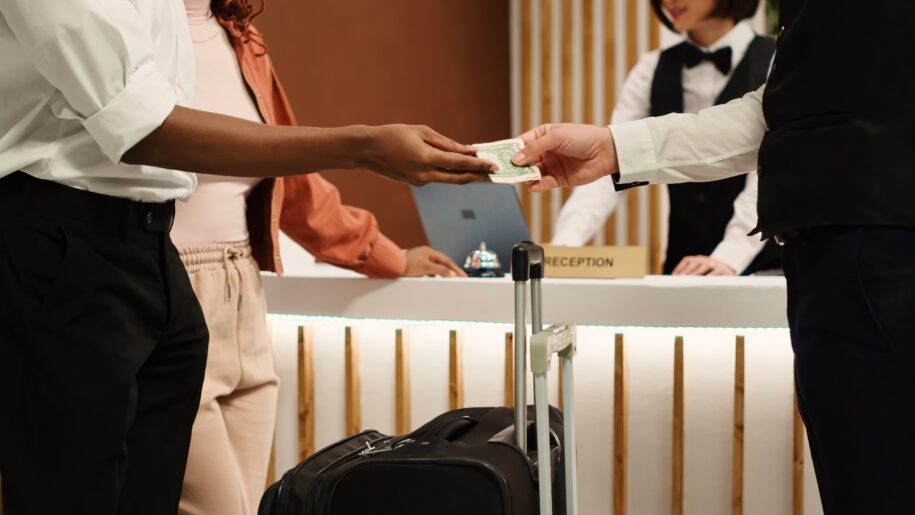
Modern tourism moves fast. Bookings can surge overnight, demand can vanish in a day, and rates can shift multiple times between morning and evening. In this environment, dynamic pricing – the practice of adjusting room rates based on demand and market signals – has become a central pillar of hotel revenue management. It’s not only relevant for hoteliers trying to protect margins and improve RevPAR. It also matters for travelers who want to understand why prices change so quickly, and how to book with better timing and better value.
In this article we’ll break down how dynamic pricing works in hospitality, why it became the standard, and where its limits lie – especially when guest perception and fairness are at stake. We’ll also look at how “dynamic” thinking extends beyond pricing into the travel experience itself, where on-demand services can remove friction around arrival and departure. That’s where a solution like Baggysitter can fit: not as a pricing tool, but as an example of flexible service design that supports smoother travel.
INDEX
- What dynamic pricing is in hotels
- From airlines to hotels: the evolution of dynamic pricing
- Why hotels choose flexible pricing strategies
- How pricing algorithms work in tourism
- Benefits for hotels and guests
- The limits of dynamic pricing and guest perception
- Fixed or dynamic rates? A concrete comparison
- The importance of data and revenue management
- Technology and automation: the role of pricing software
- Impacts on traveler behavior
- From dynamic pricing to dynamic service: the Baggysitter example
- New industry trends and future outlook
1. What dynamic pricing is in hotels
Dynamic pricing (often called dynamic rate setting) is a strategy that updates room prices based on changing conditions such as demand, remaining inventory, seasonality, local events, booking lead time, and user behavior by channel. The goal is not simply to charge more. The real objective is to find the best balance between occupancy and margin, so the property sells each room-night at the most sustainable price for that specific moment. In other words, dynamic pricing is the execution layer that translates market signals into rate decisions.
While the concept isn’t new, today it’s far more visible because of digital distribution. OTAs, metasearch, real-time competitor benchmarking, and automated systems make it easier to adjust rates quickly – and easier for guests to notice those changes. That’s why dynamic pricing has become a standard practice in modern operations. It allows hotels to protect high-demand periods, stimulate demand in weaker windows, and stay competitive without losing control of positioning and profitability.
2. From airlines to hotels: the evolution of dynamic pricing
Dynamic pricing has its roots in airline yield management, built around a simple reality: inventory is finite and perishable. A seat that departs unsold disappears forever. Airlines learned that not all customers have the same willingness to pay, and that price alone isn’t enough to manage that difference. They also introduced “fences” – rules that separate segments – like advance purchase requirements, refundability constraints, minimum stay logic, and service bundles. The combination of price and rules created a system that could maximize revenue without selling everything “at any cost.”
Hotels share the same core logic: rooms are limited, and a night expires if it isn’t sold. Over time, the industry adapted airline thinking to hotel realities. Hotels don’t sell routes; they sell dates and stays. They don’t optimize revenue per seat; they track KPIs like ADR, occupancy, and RevPAR. Still, the mechanism is comparable: forecast demand, segment customers, manage availability, and adjust rates as signals change.
What accelerated this evolution was digital distribution. Once hotels connected PMS systems, channel managers, and OTAs, rates could move closer to real time. Algorithms started reacting to measurable inputs: lead time, pick-up trends, remaining rooms, event calendars, market spikes, competitor positioning on OTAs and metasearch, and conversion data by channel. When pick-up accelerates and inventory tightens, the system pushes prices upward. When demand slows and cancellations rise, it relaxes rates or creates a targeted incentive. The result is a pricing model that behaves like a continuous response to the market rather than a fixed seasonal grid.
3. Why hotels choose flexible pricing strategies
Hotels adopt dynamic pricing because it’s one of the most direct ways to protect profitability in a market that rarely stays stable. A fixed rate structure can feel safe, but it often creates two costly outcomes: underpricing during peak demand and overpricing during soft demand. Dynamic pricing reduces both risks by allowing the property to adjust quickly when signals shift – which is essential when a major event, a competitor promotion, or a change in flight patterns can reshape demand overnight.
The benefits go beyond revenue. Flexible pricing also provides operational clarity. When pricing rules are connected to demand forecasts and distribution strategy, teams can plan staffing, housekeeping load, and service levels with more confidence. Over time, dynamic pricing also improves market understanding because it forces a property to observe which segments convert, what value guests respond to, and which channels produce profitable demand rather than “just bookings.”
4. How pricing algorithms work in tourism
Dynamic pricing algorithms combine historical performance, real-time booking pace, and demand forecasting to recommend – or automatically apply – the most appropriate rate. They typically evaluate variables such as booking lead time, length of stay, day-of-week patterns, seasonality, event impact, competitor benchmarks, cancellations, and channel conversion rates. The point is not to guess the future perfectly. It’s to make decisions that are statistically stronger than manual intuition, and to update those decisions when new data arrives.
More advanced systems add AI and machine learning to improve forecasting and detect patterns that are difficult to see manually. They may model how demand reacts to price changes, identify rate thresholds where conversion drops, or spot early signals of a demand spike. Even in these cases, the best results come from a structured strategy: algorithms perform better when the property has clear boundaries like minimum rate floors, positioning goals, inventory protection rules, and margin constraints.
5. Benefits for hotels and guests
For hoteliers, dynamic pricing increases the chances of selling rooms at the right moment and at a price that makes sense for demand. It helps capture upside during high-demand peaks, reduce empty inventory in weak periods, and manage channel mix more intentionally. It also supports stronger forecasting, because rate strategy becomes tied to measurable indicators rather than fixed assumptions.
For guests, dynamic pricing can be beneficial – but only if you understand how to navigate it. Booking earlier often improves value in high-demand periods. Choosing less crowded weekdays, flexible travel dates, or alternative neighborhoods can reduce cost. Monitoring prices over time can help, especially in destinations affected by events and seasonality. Dynamic pricing also opens the door to more tailored packages and add-ons, where value can improve even if the base rate is higher – as long as the offer matches what the guest actually wants.
6. The limits of dynamic pricing and guest perception
The biggest weakness of dynamic pricing isn’t technical – it’s psychological. Guests can perceive rapid changes as unfair, especially when prices fluctuate dramatically over short periods. Two travelers booking the same room on the same date may pay very different amounts, and that difference can feel arbitrary if the property doesn’t communicate value clearly. When dynamic pricing is too aggressive, it can also create distrust, which damages long-term loyalty and reputation.
That’s why many properties try to balance flexibility with consistency. They keep clear rate structures, maintain brand positioning, and focus on value signals that justify price changes: service level, location demand, event periods, flexibility options, and inclusions. Dynamic pricing works best when it’s paired with transparency and a stable guest experience. Algorithms can optimize price, but they cannot protect trust by themselves.
7. Fixed or dynamic rates? A concrete comparison
Fixed rates offer stability and simplicity. They reduce operational effort and make pricing easy to communicate. The downside is that they ignore market reality. In a digital environment, demand rarely behaves in a smooth, predictable way. Fixed pricing tends to underperform because it cannot respond to sudden peaks, competitor moves, or shifts in booking behavior.
Dynamic rates improve adaptability. They enable better segmentation, more precise seasonality management, and smarter inventory protection. In practice, many properties use a hybrid approach. They maintain fixed or negotiated rates for groups, corporate contracts, or long-term agreements, while using dynamic pricing for transient demand across direct and OTA channels. This combination can deliver both consistency and performance – as long as the logic is clear and the pricing architecture remains coherent.
8. The importance of data and revenue management
Dynamic pricing is only as strong as the data behind it. Without reliable information on booking pace, cancellations, channel performance, and competitive context, pricing becomes guesswork. This is where revenue management provides the strategic layer: it defines objectives, builds forecasts, monitors KPIs, and ensures that price changes align with distribution strategy and positioning.
The important shift is that revenue management is no longer limited to large hotel chains. Smaller hotels and B&Bs can now access affordable tools for analytics, competitor monitoring, and forecasting. This democratization is changing the industry, because it raises the performance baseline. Dynamic pricing becomes less a “growth hack” and more a professional standard for properties that want to protect margins consistently.
9. Technology and automation: the role of pricing software
Pricing software and RMS tools have become the operational engine behind dynamic pricing. These systems connect with PMS platforms and channel managers to update rates across all channels in a synchronized way. They can automate routine adjustments, suggest actions based on pick-up and occupancy thresholds, and benchmark competitor positioning in real time. In many cases, they also reduce human error, especially when properties sell across multiple OTAs and direct platforms.
The best systems are not just automation tools. They are decision support systems. They make it easier to test strategies, measure impact, and create repeatable logic. Automation frees time, but what matters is what you do with that time: stronger analysis, better offer design, improved channel mix, and a more consistent guest experience.
10. Impacts on traveler behavior
Dynamic pricing has changed traveler behavior significantly. Guests compare more channels, monitor rates more often, and delay decisions when they expect price changes. Some travelers set alerts or use apps to track fluctuations. Others pay a premium for flexibility, refundability, or perks that reduce uncertainty. This behavior creates a loop: the more travelers react to price signals, the more pricing systems are designed to respond to conversion patterns.
For hotels, this means that competing on price alone is less effective over time. Value perception becomes central. If your rate is higher, the guest must feel why. That can come from clear communication, stronger reviews, better inclusions, or smoother experience design. In a dynamic market, being “worth more” is often a stronger strategy than being “cheaper.”
11. From dynamic pricing to dynamic service: the Baggysitter example
The logic of being dynamic doesn’t apply only to rates. It also applies to services around the trip. While hotels adjust prices based on demand, travelers increasingly seek flexible, on-demand solutions that reduce friction and improve time efficiency. Luggage is a good example: arrival and departure are often the moments where experience breaks down, especially when check-in is later than arrival or when guests want to enjoy the city after check-out.
Baggysitter is a pick-up and delivery service that fits this need. A driver can collect luggage at the airport, train station, or directly at the hotel, and deliver it to the next address based on the traveler’s timing. It’s a practical example of “dynamic service”: flexible, on-demand, aligned with real-world travel flows. In an ecosystem that moves in real time, ancillary services that adapt to guest schedules can increase perceived quality and reduce operational stress for properties.
12. New industry trends and future outlook
The future of pricing in tourism will become even more data-driven and integrated. AI, predictive analytics, and broader datasets will improve forecasting and allow more precise rate actions by date, segment, and channel. At the same time, the industry will move toward models that connect price with experience value: dynamic packages, real-time offers, flexible subscriptions, and partnerships that improve the end-to-end journey.
In this scenario, dynamic pricing is not only about numbers. It’s about adaptability: the ability of hospitality to evolve alongside modern traveler needs. Properties that pair smart pricing with smooth service design will be the ones that protect margins while also building trust, loyalty, and long-term brand strength.
Leave a Reply