
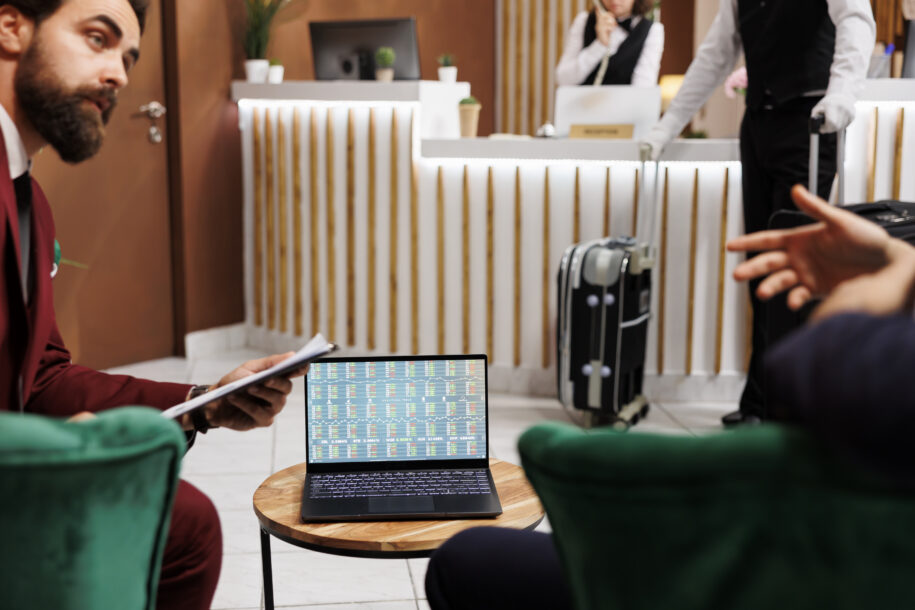
In today’s hospitality landscape, “good service” isn’t only about a friendly welcome or a well-made room. It also depends on operational consistency. Guests expect fast confirmations and accurate availability. They want smooth check-in and clear communication before, during, and after the stay. Behind the scenes, properties juggle multiple sales channels and dynamic pricing. They also manage housekeeping, invoicing, payments, and guest data. Often they do it with small teams and tight margins. This is where a PMS (Property Management System) becomes essential. It acts as the operational backbone of a hotel, B&B, or vacation rental. It centralizes daily activities and turns scattered tasks into a controlled process.
A PMS doesn’t replace hospitality. It protects it. It reduces manual work and prevents common errors. That includes rate mismatches, missed payments, and overbookings. As a result, staff gain time for what matters most. They can focus on welcoming guests and solving issues quickly. They can also make the stay feel effortless. Hospitality is increasingly end-to-end, so the ecosystem around the stay matters too. Arrival logistics and mobility services can shape the experience. For example, a luggage pick-up and delivery service like Baggysitter can reduce friction. It helps guests who arrive early, depart late, or want to move around without bags. In the same way a PMS streamlines internal workflows, luggage logistics support the journey outside the property. This is especially valuable in urban destinations.
INDEX
- What PMS means and what it is used for
- How a Property Management System works
- Key features of a modern PMS
- Benefits for hotels, B&Bs, and property managers
- PMS and channel manager: a strategic combination
- Integrations with revenue management software
- How to choose the most suitable PMS for your property
- Mistakes to avoid when adopting a new PMS
- Training and support: key success factors
- The most widely used PMS solutions in the Italian market
- The role of the PMS in the guest experience
- The future of PMS and digital hospitality
1. What PMS means and what it is used for
PMS stands for Property Management System—a management platform designed to coordinate the operational life of an accommodation property. In practical terms, it’s the software that keeps bookings, availability, rates, guest profiles, and payments aligned, while supporting core daily activities like check-in/check-out and administrative reporting. Instead of juggling multiple spreadsheets, emails, OTA extranets, and paper checklists, the PMS becomes the single source of truth: when a reservation is confirmed, availability updates instantly; when a payment is recorded, it’s visible to reception and administration; when a room is marked “dirty,” housekeeping can act without delays or guesswork.
The PMS was born to eliminate the fragility of manual management, where one missed update can trigger a chain reaction: double bookings, wrong rates, confusion between departments, and guests who sense disorganization. With a PMS, the property gains structure and speed. Data is centralized, processes become repeatable, and teams can work with greater confidence—even during peak season, high turnover weekends, or multi-channel sales periods.
2. How a Property Management System works
A PMS works as a digital command center that connects the key departments of a property—front desk, housekeeping, administration, and often marketing—inside one environment. Every action updates the system in real time, so the property operates on shared, current information rather than partial updates. When reception changes a room assignment, housekeeping sees it. If a guest extends the stay, availability updates instantly. In case of a failed payment, the issue appears early—before check-out becomes stressful.
Most modern PMS platforms are cloud-based, which makes them easier to maintain and more flexible for teams that need to access data from different devices or locations. Cloud architecture also means updates are continuous (new features, improved security, bug fixes) without installing local servers or running complex IT operations. Crucially, a PMS doesn’t live alone: it often integrates with channel managers, accounting tools, CRM modules, payment gateways, and revenue management systems. The more connected the setup, the more the PMS becomes a true technology hub—one that supports not only daily operations, but also profitability and the overall quality of the guest experience.
3. Key features of a modern PMS
A strong PMS should cover the essentials and reduce operational effort, not add complexity. At the core, it must handle reservations, room allocation, and availability with enough reliability to prevent overbooking and rate inconsistencies—especially when multiple channels are active. But a modern PMS goes further: it supports a digital front desk experience (faster check-in/check-out, smoother identity and payment handling, fewer manual steps), and it helps properties build cleaner administrative workflows through billing, invoices, receipts, and automated reporting.
Operational coordination is equally important. Housekeeping features should allow real-time room status updates, task assignments, and cleaning priorities based on arrivals and departures, so the property avoids “last-minute room panic.” Guest data management (often through an integrated CRM) is another pillar: profiles, preferences, stay history, and communication logs allow a property to personalize service without relying on staff memory. Finally, analytics and reporting transform the PMS from a “management tool” into a decision tool: occupancy trends, ADR, RevPAR indicators, channel performance, cancellation patterns, and forecasting signals become accessible and actionable—especially when you need to adjust strategy quickly.
4. Benefits for hotels, B&Bs, and property managers
The immediate benefit of a PMS is time—and time in hospitality directly impacts both margins and service quality. Automation reduces repetitive tasks like manual calendar updates, duplicated data entry, and constant back-and-forth between departments. Teams gain clarity: who does what, when, and based on which information. Errors decrease, internal communication improves, and the property becomes more resilient during high workload periods.
From the guest’s side, the difference shows up as “smoothness.” Faster check-in, fewer issues with payments or reservations, clearer pre-arrival messages, and more consistent service delivery all contribute to perceived quality. A well-used PMS also supports proactive hospitality: if the system helps staff anticipate arrivals, preferences, and special requests, the property can act earlier and respond better. In short, the PMS isn’t just software—it’s a way to standardize quality, protect reputation, and grow without operational chaos.
5. PMS and channel manager: a strategic combination
A PMS becomes dramatically more powerful when paired with a channel manager, because this is how a property controls distribution across OTAs and online channels without losing accuracy. The PMS manages internal operations; the channel manager synchronizes inventory and rates externally. When integrated, the workflow becomes automatic: a booking from Booking.com, Expedia, or Airbnb updates availability in the PMS immediately, and the channel manager pushes the new availability to every connected platform. That’s how properties reduce the risk of double bookings, prevent rate mismatches, and avoid spending hours logging into multiple extranets just to keep calendars aligned.
This integration also supports smarter sales strategy. With centralized control, a property can update minimum stays, close-out dates, or pricing rules more confidently, knowing changes will propagate correctly. In a competitive market, speed and accuracy are not nice-to-haves—they are the baseline for professional operations.
6. Integrations with revenue management software
Revenue management is where operational data turns into strategic pricing decisions. When a PMS integrates with revenue management software, the property can adjust rates based on demand signals, occupancy pace, seasonality, competitor trends, local events, and booking windows. Instead of relying on intuition—or updating prices too late—the property gains an engine that suggests (and often automates) smarter rate actions, with the goal of improving ADR and overall revenue performance.
Some PMS platforms include built-in revenue modules, while others connect to dedicated external systems. The best configuration depends on the property’s complexity and ambition, but the direction is clear: data-driven pricing is becoming the norm, and PMS integrations make it far easier to execute it consistently without overwhelming the team.
7. How to choose the most suitable PMS for your property
Choosing a PMS isn’t about picking the platform with the longest feature list—it’s about selecting the one that fits your property’s workflow, staff skills, and growth path. Usability matters more than people expect: an intuitive interface reduces training time, lowers error rates, and increases adoption across the team. Scalability matters too: a system that works for a 6-room B&B may not work for a 30-room property with multiple rate plans and channels, and switching again later can be painful.
Compatibility is another key factor: check whether it integrates smoothly with your channel manager, payment gateways, and any tools you already rely on. Technical support (and support language) can be a dealbreaker, especially when issues happen during peak operations. Finally, evaluate cost properly: consider what’s included (updates, onboarding, support, integrations) and what becomes an add-on later. A demo and a short trial period—ideally with real workflows—are the fastest way to see whether the PMS truly reduces complexity or simply shifts it.
8. Mistakes to avoid when adopting a new PMS
Adopting a new PMS can unlock major improvements, but only if the transition is planned with operational realism. One common mistake is underestimating data migration: guest profiles, booking history, rate rules, and accounting details must be transferred correctly, otherwise the team starts “working around the system” from day one. Another frequent issue is neglecting training. Even the best PMS fails if staff use only 20% of its capability—or use it inconsistently.
Integrations are another risk area. If the PMS isn’t properly connected to your channel manager or payment workflows, you may end up with rate sync errors or manual patchwork, which defeats the purpose. Finally, skipping testing is costly: a phased rollout with a parallel run (old system + new system for a short period) helps identify issues before guests are impacted. A PMS should reduce stress, not create it—so implementation deserves the same care as any operational change.
9. Training and support: key success factors
Technology in hospitality is only as effective as the people using it. Training turns a PMS from “software we have” into “a system we rely on.” Good providers offer structured onboarding, guided setup sessions, clear documentation, and ongoing resources like webinars or tutorials. This is especially important for properties with seasonal staff or team turnover, where knowledge must be easy to transfer.
Support quality matters because issues rarely happen at convenient times. Responsive technical support keeps operations running, protects guest experience, and reduces the risk of revenue loss during critical moments. Investing in training and choosing a provider with strong support isn’t an extra cost—it’s operational insurance, and it accelerates the ROI of the PMS.
10. The most widely used PMS solutions in the Italian market
- The Italian market includes both international platforms and solutions tailored to local needs, which can be relevant for billing workflows, language, and support. Among the better-known names you’ll often see are:
- Ericsoft, widely adopted in many Italian hotel contexts.
- Slope, positioned as a cloud suite combining PMS, channel tools, and CRM elements.
- RoomRaccoon, popular among independent properties for its usability.
- Cloudbeds, an international platform with broad integrations and revenue-focused features.
- Protel PMS, typically suited to larger or more structured operations with advanced modules.
The “best” option depends less on brand and more on fit: number of rooms, distribution complexity, desired automation, staff experience, and whether you need a system that’s simple and fast or deeply customizable.
11. The role of the PMS in the guest experience
A PMS improves guest experience because it improves consistency. When check-in is fast, payments are handled smoothly, room readiness is predictable, and communication is timely, guests feel they are in capable hands. The PMS also supports personalization: preferences, stay history, and messaging tools allow properties to communicate more intelligently—pre-arrival instructions, upgrade offers, add-on services, and post-stay follow-ups can be delivered with better timing and relevance.
As hospitality becomes more digital, the guest journey stretches beyond the property walls. Reducing friction in arrival and departure moments is increasingly important—especially for city stays where guests may arrive early or leave late. That’s why integrating complementary services (for example, luggage logistics when needed) can be part of a broader strategy: the PMS keeps the operation tight, while the ecosystem around it helps the stay feel effortless.
12. The future of PMS and digital hospitality
PMS platforms are evolving toward deeper automation and stronger integrations. They’re also becoming more intelligent. Artificial intelligence will increasingly support forecasting and pricing recommendations. It will also provide staffing signals and enable automated guest interactions. All of this can happen without losing the human side of hospitality. We’ll likely see more unified “all-in-one” ecosystems as well. In these stacks, PMS, channel tools, CRM, payments, and analytics work together seamlessly. They won’t feel like separate tools stitched together.
The goal stays the same: make hospitality more efficient, more personalized, and more sustainable. The properties that win will treat technology as a service enabler. They won’t treat it as a separate IT project. A PMS sits at the center of this approach. Complementary guest services can reinforce it too, especially where operations and mobility meet. If you want to simplify luggage handling for your guests, consider arrival and departure first. You can explore how Baggysitter works and decide if it fits your guest journey.
Leave a Reply