
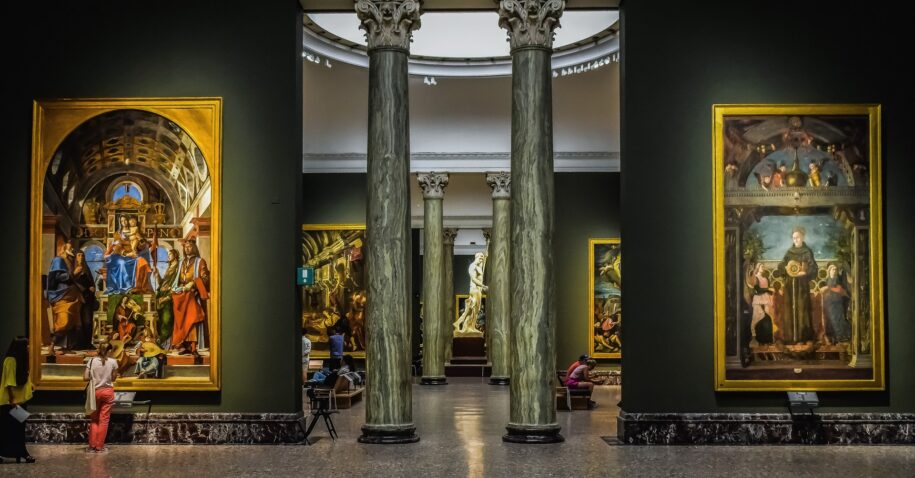
Brera District is one of Milan’s most walkable and culturally dense neighborhoods: an elegant grid of narrow streets, hidden courtyards, art institutions, independent boutiques, and a nightlife scene that feels social rather than chaotic. It sits just north of the historic center, bordering the fashion and business areas, and it’s often the place travelers choose when they want “old Milan” atmosphere without leaving the city’s most connected zone.
This guide focuses on what Brera really offers—art and architecture you can plan around, shopping that goes beyond luxury flags, and evenings that work for different budgets and moods. Along the way, you’ll also find practical logistics (how to get there, what to do with luggage between check-out and a late train, and how to pair Brera with nearby landmarks like the Duomo and Navigli).
Table of contents
- Overview of the Brera district in Milan
- How to reach the Brera district Milan
- Brera district Milan map and main attractions
- Shopping in the Brera district
- Where to eat in the Brera district
- Brera nightlife and entertainment
- Accommodation in the Brera district
- Domande frequenti
Overview of the Brera district in Milan
Brera is centrally located, but it doesn’t feel like a “museum district.” Instead, it behaves like a lived-in neighborhood built around culture. The streets are compact and easy to navigate on foot, with a continuous rhythm of galleries, cafes, bookshops, artisanal stores, and small design showrooms. Architecturally, Brera mixes elegant historic buildings with discreet contemporary interiors—an important clue to understanding why it remains both traditional and current.
From a visitor’s perspective, Brera works particularly well in three scenarios: a half-day art itinerary anchored by the Pinacoteca; a slow afternoon of shopping and coffee; and a pre-dinner walk that becomes an evening out. Because everything is close, your plan can remain flexible—useful in a city where weather, crowding, and museum time slots can change what is realistic in a single day.
What is the Brera district known for?
Brera is best known for its artistic identity, tied historically to institutions and ateliers and—today—to a dense network of galleries and cultural venues. The flagship is the Pinacoteca di Brera, one of Italy’s most important art museums, but the neighborhood’s appeal is broader: it’s also a recognized design hub (especially during Milan Design Week), a shopping area for those who prefer independent boutiques to large malls, and a dining zone that spans casual trattorie to contemporary cuisine.
It’s also known for a certain urban texture: narrow streets, soft lighting, and a social vibe that makes even a short walk feel like a “night out” without requiring a club. This is why Brera is often compared to a village inside a metropolis—an image that can be romanticized, but it captures a real point: the neighborhood’s scale invites wandering, and its commercial offer is fragmented into many small doors rather than a few dominant landmarks.
Who lives in the Brera district?
Brera’s resident profile reflects its location and the value of its real estate. It attracts professionals who work in central Milan, entrepreneurs, creatives, and long-term residents who value walkability and services. There is also a steady presence of international visitors and short-stay travelers, which shapes the neighborhood’s hospitality and retail mix—many businesses are used to a multilingual audience, and opening hours tend to align with a central, high-footfall area.
It’s important, however, to separate image from function. Brera is not simply “bohemian”: it is a central district with high demand and a curated commercial scene. That doesn’t make it inaccessible—there are affordable options for food and drinks if you know where to look—but it does mean you should expect prices, especially for accommodation and prime street seating, to mirror its prestige and convenience.
How to reach the Brera district Milan
Brera is easy to reach from most entry points to the city because it sits near key metro lines and is well connected to the historic center. If you arrive by train, you can move quickly from Milano Centrale and still be within walking distance of major attractions. If you arrive by plane, your airport transfer choice (Malpensa, Linate) will shape timing and stress more than the final “last mile,” which is usually straightforward once you’re inside the urban network.
A practical point for travelers: Brera is best experienced on foot. If you’re carrying bags—especially on check-in/check-out days—consider planning a luggage strategy so your time in the district remains enjoyable. For example, if you’re spending the day in the center before heading to a station or the airport, it can be useful to rely on a local network such as Baggysitter luggage storage in Milan to keep your itinerary light and flexible.
Directions to Via Brera Milan
Via Brera is the neighborhood’s symbolic spine, close to major cultural sites and surrounded by smaller streets full of shops and cafes. If you start from the city center (Duomo area), you can reach Brera with a pleasant walk in roughly 15–25 minutes depending on your pace and route, or in a short metro ride plus a brief walk. From the main stations, the simplest plan is typically metro + walking, because the final streets can be narrower and less convenient for cars.
If your day includes multiple stops (Duomo, Brera, then a train), it helps to organize movement in “clusters.” For example, you can keep Brera as a mid-day cluster and then shift toward the station later—especially if you use a citywide option like luggage storage across Milan to avoid backtracking just to pick up bags.
Public transport options
Brera is served by metro stops around the perimeter of the district, and the area is also reachable by tram and bus corridors that connect the center with the north and west sides of Milan. The key is to expect a short walk after public transport: the interior of Brera is intentionally “slow,” with streets that reward walking rather than fast vehicle access.
If you are combining Brera with other parts of the city—or coordinating a transfer between two addresses (for instance, a hotel and a meeting venue)—you may want to look into structured mobility services. Depending on your needs, Baggysitter describes both city services for luggage and local transfers and city-to-city options, which can be relevant when you’re moving between accommodations, stations, or different cities in the same trip.
Brera district Milan map and main attractions
On a map, Brera sits between major reference points: the Duomo and Piazza della Scala to the south, the fashion district toward the east/southeast, and more residential or business zones to the north. For planning, it helps to think in a few “micro-areas”: the museum core (around Via Brera), the boutique streets branching out from it, and the edges where Brera connects to larger arteries and transport nodes.
Because Brera is compact, you can realistically combine a museum visit, a long lunch, and a shopping stroll in a single day. What you should not underestimate is museum time: if you want a meaningful visit rather than a quick loop, plan a comfortable time block and avoid scheduling tight connections right after.
Pinacoteca di Brera: what to see
The Pinacoteca di Brera is the district’s major cultural anchor and one of the most important painting collections in Italy. The best approach is to decide what kind of visit you want: a “highlights” visit focused on a limited selection of key works, or a slower, chronological walk that includes less famous but historically revealing pieces.
To make your visit more satisfying, consider these practical tips:
- Reserve enough time: even a focused visit benefits from unhurried pacing.
- Alternate intensity and rest: Brera has plenty of nearby cafes for a break after the museum.
- Pair the museum with the neighborhood: plan to continue on foot into the smaller streets so the museum experience extends into the district’s everyday culture.
Rather than treating the Pinacoteca as a standalone stop, use it as a starting point: the neighborhood’s gallery rhythm and design spaces feel like a modern counterpart to the historical collection.
Other cultural sites in Brera
Brera’s cultural identity is not limited to a single museum. The district includes smaller exhibition spaces, private galleries, and institutions that contribute to a year-round calendar of openings and events. Even when you are not entering every venue, the neighborhood offers a “street-level” cultural experience: window displays, posters for events, and the visible work of curators and gallerists shaping what the district shows to the public.
If you enjoy contemporary art and design, look out for gallery clusters and rotating exhibitions. If your interest is more architectural, pay attention to courtyards and staircases: Brera’s buildings often hide elegant interiors behind discreet facades. This is one of the reasons the district rewards slow exploration—many of the best details are not on the main thoroughfares.
Nearby landmarks: Duomo and Navigli
One of Brera’s advantages is how easily it connects to other iconic Milan experiences. The Duomo area is close enough to reach on foot, which makes Brera a smart base if you want to see central landmarks without staying directly in the busiest squares. A practical day plan can look like this: morning at the Duomo and nearby museums, mid-day in Brera for art and lunch, then late afternoon shopping and an early evening aperitivo.
If you want to contrast Brera’s refined mood with something more informal, consider pairing it with the Navigli area later in the day. Navigli’s canals and nightlife have a different rhythm—more open, more linear, often more crowded. The combination works well: Brera for galleries and boutiques, Navigli for a canal-side walk and a different style of evening.
Shopping in the Brera district
Shopping in Brera is about curated discovery rather than scale. You won’t find huge department-store floors here; instead, you’ll find smaller boutiques where selection and aesthetic direction are the point. The district is particularly appealing if you like clothing and accessories with a strong identity, artisanal details, or a “designed” feel that reflects Milan’s creative industries.
For travelers, Brera shopping also has an advantage: it can be integrated naturally into an itinerary without requiring a dedicated shopping day. Even a short walk after the museum can include several high-quality stops, and many stores are used to international visitors asking for practicalities such as tax-free procedures or shipping options.
Brera shopping highlights
Brera’s retail landscape mixes established Italian brands with independent names. The most rewarding approach is to avoid rushing: take a route that includes both main streets and quieter lanes, where smaller shops often concentrate. You’ll find a blend of fashion, accessories, home objects, bookshops, and gift-worthy items that are less standardized than what you’d see in large commercial arteries.
To shop efficiently, set a theme for your walk:
- Wardrobe pieces (quality basics, Italian tailoring details, niche labels)
- Design objects (homeware, small furniture, lighting, stationery)
- Art and prints (galleries, limited editions, photography)
This “theme-based” method helps you compare options without feeling overwhelmed by small-store variety.
Brera Design District and design shops
The Brera Design District is a key part of Milan’s global design reputation. It becomes especially visible during major events such as Design Week, but the underlying ecosystem is present year-round: showrooms, concept stores, and studios that treat retail as a form of storytelling. Even if you’re not a professional in the sector, it’s worth exploring because it shows what “design culture” means in practice—materials, craftsmanship, and the dialogue between heritage and innovation.
For visitors interested in interiors, Brera is an accessible way to experience Milan’s design identity without committing to a trade-fair schedule. The best strategy is to visit a few curated spaces and then let the neighborhood guide you: many design-oriented shops are close to galleries and cafes, so your route remains pleasant and human-scaled.
Where to eat in the Brera district
Brera’s dining scene reflects the neighborhood’s balance of tradition and contemporary taste. You can find classic Milanese dishes and simple trattoria comfort, but also modern restaurants that lean into seasonal menus and lighter interpretations. Price-wise, Brera includes both premium addresses and more casual options—what typically changes the bill is not only the kitchen, but the location (a quieter street vs. a prime terrace) and the time (aperitivo hours can be particularly in demand).
A useful approach is to separate meals by intention: choose a relaxed lunch if you’re museum-focused, and keep dinner for a slightly broader search, potentially expanding to nearby areas if you want more variety. Reservations can help, especially on weekends or during major city events.
Popular Brera restaurants
Because restaurant landscapes change, it’s more reliable to focus on what to look for rather than a fixed list of names. In Brera, strong options often share a few traits: a concise menu, good ingredient sourcing, and a dining room that feels integrated with the neighborhood rather than designed only for quick turnover. You’ll find:
- Traditional trattorie offering regional staples in a straightforward format
- Contemporary Italian with seasonal plates and modern wine lists
- Cafes and bistros suitable for a lighter meal between visits
If you’re traveling with different preferences (vegetarian options, lighter dishes, limited time), Brera is generally accommodating—just expect that peak hours can mean slower service in the most central spots.
Typical dishes to try
In Milan—and therefore in Brera—food culture includes iconic local dishes and a wider northern Italian repertoire. If you want to connect your meal to place, consider trying classics such as risotto alla milanese (saffron risotto) or cotoletta (Milanese-style cutlet), and explore seasonal variations that many kitchens offer depending on the time of year.
As a practical note, these dishes can be hearty. If you have a museum-heavy itinerary, you might prefer a lighter lunch and reserve heavier classics for dinner, when you’re not rushing to another timed entry. Pairing your meal with a short walk afterward—Brera is ideal for this—helps the experience feel less compressed.
Brera nightlife and entertainment
Brera nightlife is often described as “elegant,” but the more accurate description is social and street-based. Many evenings begin with an aperitivo and evolve organically: a second drink in a different bar, a late dinner, or a walk through the lit streets where the neighborhood itself feels like part of the entertainment. Compared with districts that focus on clubs, Brera tends to favor conversation-friendly venues and a mixed crowd of locals, professionals, and visitors.
That said, the atmosphere changes by day of the week and season. Weekends can be busy, and during citywide events (fashion, design), the neighborhood becomes a meeting point. If you prefer calmer evenings, aim for early aperitivo hours or choose a weekday.
Nightlife spots in Brera
Brera offers several nightlife “formats,” and your choice depends on what you want from the evening:
- Aperitivo bars for a relaxed start and people-watching
- Wine bars with smaller rooms and a slower pace
- Cocktail bars where the drink list becomes part of the experience
For travelers, the simplest strategy is to keep the evening walkable. Brera’s streets allow you to try more than one place without committing to long transfers, which is especially useful if your group has different preferences. If you’re coordinating an early departure the next morning, staying in the area also reduces late-night transport complexity.
Milan fashion district connection
Brera’s proximity to Milan’s fashion district matters not only for shopping but for the evening energy the city is known for. In practice, you can move from Brera to fashion-focused streets in minutes, which makes it easy to combine a design-oriented afternoon with an aperitivo in a more “corporate-glam” setting, then return to Brera for dinner in a quieter lane.
This connection also explains why Brera can feel polished rather than purely bohemian: the neighborhood sits at the crossroads of culture, commerce, and international city branding. For visitors, that’s a benefit—variety is close—provided you plan realistically around crowds during major fashion and design dates.
Accommodation in the Brera district
Staying in Brera is a strategic choice for travelers who want to be central without being in the densest tourist squares. You’re close to museums, shopping, dining, and transport, and you can often walk to major sights. The trade-off is cost: Brera’s location and prestige generally push accommodation rates upward compared with less central districts.
If you’re comparing options, it’s useful to distinguish between “Brera proper” (the most charming, often most expensive core) and the edges that still give you Brera walkability while offering a broader range of room types and prices. For check-in/check-out days, central accommodation also pairs well with flexible luggage logistics—especially if your train departs from Milano Centrale or your flight from Linate or Malpensa.
Hotels in Brera Milan
Hotel supply in and around Brera includes boutique properties, business-oriented hotels, and smaller hospitality formats. When evaluating where to stay, consider practical variables that matter in this part of Milan:
- Sound insulation: some streets can be lively in the evening, especially on weekends.
- Room size: historic buildings can mean compact rooms; check measurements if space matters.
- Access: if you have mobility needs, confirm elevator availability in older buildings.
If your itinerary includes an early train, you might plan a last evening in Brera and then a smooth transfer to the station area. In that case, knowing the options around Milano Centrale luggage storage and delivery can help you avoid dragging bags through crowded streets on departure day.
Price overview and living costs
Brera is widely considered a high-cost area in Milan, and this shows up in both long-term living costs and short-stay travel budgets. Accommodation rates tend to be higher due to centrality, boutique inventory, and sustained demand. Dining and drinks can also cost more in prime locations—particularly for outdoor seating in the most frequented streets—although you can still find good value by choosing smaller venues and slightly quieter corners.
For travelers, the key is to align spending with priorities. If Brera is where you want to spend most of your time, paying a premium for location may reduce transport costs and time. If you plan to explore wider Milan, you might stay in a more affordable district and visit Brera as part of a day itinerary, especially since it connects well to the rest of the city. If your trip includes an airport transfer, the overall budget can shift depending on which airport you use—options and timing differ between Milan Linate and Milan Malpensa.
Domande frequenti
For additional practical answers about luggage storage, delivery timing, service coverage, and how logistics typically work during a city visit, you can consult Baggysitter’s FAQ page.
What kind of neighborhood is the Brera district?
Brera is a central Milan neighborhood with a strong cultural identity. It combines major institutions (like the Pinacoteca), a dense network of galleries and creative businesses, and a lifestyle-oriented offer of cafes, restaurants, and boutiques. It is walkable, visually cohesive, and generally perceived as refined, though it remains a functioning city district rather than a purely tourist zone.
How much does it cost to live in Brera district Milan?
Living costs in Brera are typically among the higher tiers in Milan due to the area’s centrality and limited housing supply. Rent and property prices are influenced by proximity to the historic center and the neighborhood’s prestige. Exact amounts vary widely based on apartment size, building condition, and precise location within the district, so it’s best to consult up-to-date local listings if you need current figures.
Why is Brera called the artists’ quarter?
Brera’s “artists’ quarter” label comes from its long-standing link to art education, studios, exhibitions, and institutions that shaped Milan’s cultural life. Over time, that identity expanded to include galleries, publishing, design, and creative commerce. Today the term reflects both history and the current concentration of cultural venues that keep art present in the neighborhood’s daily rhythm.
What are the must-see places in Brera district Milan?
Most visitors prioritize the Pinacoteca di Brera and the streets around Via Brera for their blend of culture and atmosphere. Beyond that, the “must-see” list depends on your interests: gallery hopping for contemporary art lovers, design showrooms for those interested in interiors, and quieter courtyards and side streets for travelers who enjoy architectural details and a slower pace.
What makes the Brera Design District special?
The Brera Design District is special because it shows how Milan’s design culture works in real urban space: studios and showrooms are embedded in everyday streets, so innovation and craft sit next to cafes, galleries, and residential buildings. It becomes highly visible during major design events, but its strength is structural—an ecosystem of places where design is presented, discussed, and experienced year-round.
Whether you come for a museum visit, a design-focused shopping walk, or an evening aperitivo that turns into dinner, Brera works best when you keep the schedule breathable. Give yourself time to wander, accept that the best corners are often the least planned, and let the neighborhood’s compact geography do what it does well: connect art, everyday city life, and Milan’s contemporary taste within a few walkable blocks.
Note for hospitality partners: if you manage an accommodation in central Milan and are evaluating tools that influence distribution and profitability, you may find it useful to explore topics such as how OTAs impact visibility, rankings, and margins or the role of property management systems for hotels and B&Bs—especially relevant in high-demand districts where pricing and operations matter daily.
Leave a Reply