
Milan is often described through its open-air icons—piazzas, elegant boulevards, and neighborhood walks—but it is equally rewarding indoors. Whether you land on a rainy afternoon, you have a late train to catch, or you simply prefer culture, design, and food experiences under a roof, the city offers plenty of options that don’t depend on the weather. The key is knowing what requires booking, what is best done early, and how to plan your time between neighborhoods so you avoid long transfers in the rain.
One practical note before you start: indoor sightseeing in Milan tends to involve moving between multiple stops, and bags quickly become a friction point (museum cloakrooms can be limited or not suitable for suitcases). If you’re arriving before check-in or leaving after check-out, it can help to organize your route around convenient luggage storage and hand-off points. On the Milan luggage storage and delivery service page you can see how travelers typically manage bags while continuing their day—useful especially when your plan shifts because of weather.
Table of contents
- Museums to visit in Milan
- Shopping and indoor experiences
- What to do in Milan when it rains
- Tips for indoor visits in Milan
- Indoor day trips from Milan
- Domande frequenti
Museums to visit in Milan
Milan’s museum landscape is broader than many first-time visitors expect. Beyond the headline names, you’ll find collections that connect art to science, craft to industrial design, and music to civic history. The most important planning rule is simple: some sites require booking in advance and enforce time slots. When the weather is poor, demand concentrates even more indoors, so pre-planning can save you hours. Consider grouping museums by area (for example, the historic center and the “Duomo–Scala” axis, or the Sant’Ambrogio–Navigli side) to minimize transfers, especially if you’ll be relying on public transport.
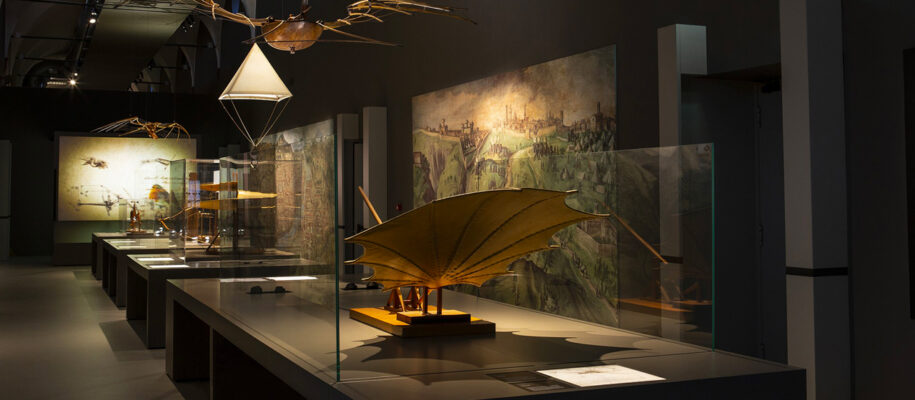
Museo Nazionale Scienza e Tecnologia Leonardo da Vinci
This is one of the most versatile indoor choices in Milan because it works for many different travel styles: solo travelers who want an in-depth museum visit, couples looking for an educational but not overly formal experience, and families who need variety. The museum’s strength is its mix of themes—transport, energy, communication, materials—often presented with large-scale objects and clear interpretive paths. If you’re visiting on a wet day, the size of the building matters: you can comfortably spend a half day without feeling like you’re “killing time.”
From a practical standpoint, it’s an easy museum to integrate into a wider itinerary because the surrounding area has other indoor-friendly stops and transport connections. If you’re building a route that starts after arrival (and you don’t want to drag luggage through galleries), you can plan the day around a storage-and-move approach; the Baggysitter Milan service overview is a helpful reference for travelers organizing pick-up and delivery while they keep sightseeing.
Museo del Cenacolo Vinciano
Seeing Leonardo’s Last Supper is a different kind of indoor activity: it’s not a museum you browse at your own pace, but a tightly managed visit designed to protect the work and regulate humidity and flow. The result is a short, focused experience that can fit into a half-day plan, but it requires careful timing. If your trip is weather-disrupted, this can be an advantage: you get a guaranteed indoor highlight without spending the whole day in one place.
Because time slots are strict, plan your day so you arrive early and avoid rushing from a distant neighborhood. A useful strategy is to keep the hours around your booking flexible with nearby indoor options—churches with art, small exhibitions, or a café stop—so you can adapt if public transport is slower due to rain. To keep logistics smooth when you’re transiting through the city, it’s worth checking practical solutions on the Milan page that explain how travelers manage bags between fixed-time attractions.
Castello Sforzesco
The Castello Sforzesco complex is a strong rainy-day option because it combines a historic setting with multiple museum sections and covered routes. Even if you are not aiming for a deep study visit, the building itself helps you understand Milan’s civic history and the city’s relationship to power, fortification, and patronage. The experience can be tailored: you can focus on one museum section, or build a broader visit if the weather keeps you indoors for longer.
To get the most from it, think about what kind of museum visit you want. Some travelers prefer a structured “highlights” approach (one or two sections, then move on); others enjoy the slower pace of exploring multiple collections in sequence. In either case, planning your movement matters: the castle sits close to major transport links, so you can slot it into a day that also includes the historic center and other indoor stops without too much walking in the rain. Again, if you’re between accommodations, the Milan luggage logistics guide can help you keep the day friction-free.
Museum of Senses Milano
Not every indoor activity needs to be a traditional museum. The Museum of Senses is an example of a more experiential, perception-based visit—useful when you want something lighter, more interactive, or simply different from classic galleries. It can work well for mixed groups (for example, friends with different interests) or as an alternative when you want an indoor stop that is less dependent on language and more focused on physical experience.
For planning, consider it a “time box” activity: it fits neatly into a few hours and pairs well with indoor shopping or a café-and-bookshop route. If your rainy-day plan includes multiple short stops, keeping your bags out of the way becomes more important than on a single-museum day. The services available in Milan can be a practical reference when you’re moving through the city with tight timing.
Teatro alla Scala
La Scala is both a performance venue and a cultural institution that represents Milan’s musical identity. For an indoor activity, you have two main approaches: attending a performance (which depends on seasonality and booking), or focusing on the museum component that contextualizes the theater’s history, costumes, and the broader world of opera. Even if you are not a dedicated opera fan, the venue can be a meaningful stop because it anchors the city’s relationship to the arts and offers a different atmosphere from painting-focused museums.
As with other high-demand sites, plan ahead. A rainy day can concentrate visitors into the same indoor landmarks, so early time slots are often smoother. If you’re building a center-based itinerary—Duomo area, Galleria, Scala—consider a compact route that minimizes exposure to weather. For practical city planning, the Milan information page can support decisions about moving between attractions without carrying luggage.
Shopping and indoor experiences
Shopping in Milan is not only retail; it’s an architectural and cultural experience, especially when you treat it as a way to understand how the city expresses design and lifestyle. On rainy days, covered passages, department stores, and multi-level concept spaces become natural “itinerary connectors” between museums and meals. The best approach is to decide whether you want iconic places (which can be crowded) or more functional shopping where you can actually find what you need without losing time.
Galleria Vittorio Emanuele II
Even travelers who aren’t planning to shop typically pass through the Galleria Vittorio Emanuele II, and in bad weather it becomes one of the most comfortable indoor corridors in the city center. Treat it as an architectural visit: look up, note the iron-and-glass structure, and understand how the space was designed to be both functional and symbolic—an “indoor street” that connects key civic landmarks. If your plan includes a museum nearby, the Galleria is also a convenient buffer stop to recalibrate your timing when rain slows you down.
If you’re arriving with luggage and your goal is to spend the first hours in the center, it’s easier when you can move hands-free. The Baggysitter Milan page can help you plan a route that keeps you in central indoor areas without carrying bags through crowded arcades.
Best shopping spots open now
When the weather changes your schedule, the question becomes less “where should I shop?” and more “what is realistically open right now near me?” Milan offers a mix of department stores, chain retailers, independent boutiques, and design-oriented shops. The smart rainy-day method is to build a shortlist by neighborhood and use your time slots efficiently: if you have a fixed museum booking, choose shopping stops within a short indoor-friendly walk or a direct metro ride.
To keep your choices practical, consider these criteria when selecting indoor shopping stops:
- Proximity to your next timed activity (to avoid rushing in the rain).
- Indoor depth: multi-floor stores and covered passages allow longer, comfortable visits.
- Utility: travel essentials, weather gear, and small replacements can be more valuable than souvenir browsing.
If you’re combining shopping with travel logistics (late check-in, early check-out), it can help to think in “micro-itineraries” across a few hours. The Milan service page is a useful reference point for people who want to align indoor plans with bag drop-off and delivery.
Cooking classes in Milan
Cooking classes are one of the most satisfying indoor activities because they transform a rainy day into a social, skill-based experience. They also work well when you’ve already “done the main sights” and want a more grounded connection to local food culture. The main variable is format: some classes are structured as hands-on workshops; others are demonstrations with tasting. Either way, they offer a clear beginning and end, which is helpful for planning around transport and dining.
To choose the right class, consider what you want to take away: a technique you can replicate at home, a deeper understanding of ingredients, or simply a relaxed evening. If you’re in Milan for a short stay, an afternoon class can also solve the “what do we do between rain showers?” problem. For travelers building an itinerary that includes experiences across the city, consult the Milan page to keep your day organized—especially if you need to be flexible about where your bags are while you attend a workshop.
What to do in Milan when it rains
Rain in Milan doesn’t have to mean a compromised trip. The city’s strength is that many of its most meaningful experiences are already indoors: art, music, design, food, and architecture through covered spaces. The main shift is tactical: prioritize attractions where you can control time (booked slots or time-boxed visits), add “warm transitions” like cafés and bookstores, and avoid long walks between neighborhoods. A rainy-day plan works best when you cluster activities and allow a buffer for transport delays.
Indoor museums and galleries
A museum-focused rainy itinerary can be as simple as choosing one anchor site and adding a second stop nearby. The key is to balance depth and fatigue: large institutions are immersive but can be demanding, while smaller galleries offer a lighter pace. If you’re unsure, aim for one longer museum and one shorter, more specialized visit. This approach also reduces the risk of spending too much time queuing outdoors.
Because rain pushes more visitors inside, planning becomes more important than on a sunny day. Booking where possible, arriving early, and selecting museums with good transport links helps keep the day calm. For logistical planning across the city—especially if you’re moving with luggage between accommodations—use the Milan page as a practical baseline for organizing indoor routes.
Fun activities for families
Traveling with children on a rainy day is mostly a matter of rhythm. You want indoor activities with clear transitions, enough sensory variety, and places to pause without pressure. Museums with interactive elements, hands-on exhibitions, and “short attention span friendly” spaces tend to work best. You can also plan alternating blocks: an active indoor stop, then a snack break, then a calmer cultural visit. This keeps the day enjoyable rather than endurance-based.
Families often ask very practical questions—what size of bags are allowed, whether strollers are permitted, and how to manage time windows without stress. If you’re in this situation, the FAQ section can help clarify common travel logistics that matter when you’re coordinating kids, transport, and indoor venues.
Indoor tours and workshops
If you prefer structured experiences, indoor tours and workshops are a strong alternative to free-form sightseeing. In Milan, options can include design-focused tours, themed museum walks, and craft or culinary workshops. The advantage is that you outsource planning: the route and timing are set, which can be a relief when weather makes improvisation harder. It’s also a way to add context—understanding how fashion, design, and industrial culture shaped the city gives meaning to what you see in shops and museums.
When selecting an indoor tour, check duration, meeting point accessibility in the rain, and cancellation policies. For a well-organized day that includes multiple indoor stops, the Milan page can help you plan movements around fixed schedules, particularly if you are navigating with luggage on arrival or departure day.
Tips for indoor visits in Milan
Indoor activities are often assumed to be “easy planning,” but Milan can be demanding in different ways: timed entries, peak hours in the center, and the need to connect neighborhoods efficiently. A few tactical choices—checking patterns by season, prioritizing free indoor stops when appropriate, and using filters when researching options—can make the difference between a smooth day and a fragmented one. The goal is to reduce uncertainty: know what is bookable, what is flexible, and what is worth doing spontaneously.
How to check Milan weather by month
Weather affects more than whether it rains on a given day; it changes the city’s rhythm. Seasonal patterns influence crowd levels, daylight hours, and the appeal of different neighborhoods. Checking the weather by month helps you build realistic expectations: you can plan more indoor-heavy days when conditions are likely unstable and leave outdoor neighborhoods for clearer windows. This matters if you have limited time and want to avoid wasting half a day switching plans on the spot.
As you draft your itinerary, keep indoor anchors that work in any month—major museums, indoor markets, covered architectural walks—and connect them to flexible stops. For a practical base when planning Milan logistics around seasonal conditions, see the Milan travel and services page.
Free places to visit indoors
Milan can be expensive, but indoor culture is not always ticket-based. Depending on the day and the place, you may find free entry areas, open religious buildings with art and architecture, and public spaces that are worth visiting for design and atmosphere. The smart approach is to treat “free” as a category in your plan rather than an afterthought: it gives you fallback options when timed tickets are sold out or when rain makes you linger indoors longer than expected.
To build a balanced day, combine one paid highlight with one or two free indoor stops. This keeps your schedule resilient: if queues are long or a museum is fully booked, you still have meaningful alternatives nearby. For general city planning and practical movement strategies, use the Milan page as a reference for organizing your itinerary without unnecessary back-and-forth.
Using refinement filters: open now and top rated
When rain hits, speed of decision-making becomes important. Refinement filters—“open now,” “top rated,” distance-based sorting—are not just convenience features; they are how you protect your time. Instead of browsing endless lists, define your constraints (you have 2 hours before a booking; you want to stay within a single metro line; you need indoor seating) and filter accordingly. This approach reduces the risk of arriving at a closed venue or spending too long in transit.
A good method is to run your search twice: once for your “must-do” priority (museum, experience, shopping) and once for a backup category (cafés with indoor seating, bookstores, smaller galleries). Then choose the option that best fits your timing. If you’re mapping these choices around travel logistics like luggage, the Milan page can help you keep the day coherent while adapting quickly.
Indoor day trips from Milan
If you’re in Milan for multiple days and the forecast looks persistently wet, an indoor-oriented day trip can be a smart way to diversify your itinerary without relying on outdoor strolling. The key is choosing destinations where the main value is covered: museums, cultural centers, historic interiors, and indoor markets. Since day trips involve tighter timing—train schedules, return times, and station transfers—focus on places that are straightforward to reach and where the indoor attractions justify the travel effort.
Nearby covered attractions
From a planning perspective, “nearby” means destinations you can reach with limited transfers and where stations connect well to indoor sites. When rain is heavy, complex connections add friction and increase the chance you lose time. Look for routes where you can walk short distances under cover or rely on a direct line. Consider also the comfort factor: traveling in damp conditions can be tiring, so aim for a destination with one main indoor anchor rather than many scattered stops.
If your day trip starts or ends with luggage logistics—common on check-out days—keeping the Milan side of your plan organized is essential. The Milan services page can be useful when you need to coordinate baggage handling while you move between stations and indoor visits.
Museums and cultural centers accessible in a day
A good indoor day trip from Milan is one where you can arrive, visit one major museum or cultural center, and return without rushing. Prioritize destinations with clear opening hours, reliable public transport, and enough indoor content to justify the trip even if the weather stays poor. Many travelers underestimate the “hidden” time of day trips: waiting for trains, navigating stations, and finding the right entrance. Choosing one strong cultural target can make the day feel intentional rather than improvised.
As you plan, build in buffers—especially in winter months when daylight is shorter and rain can slow movement. For overall planning support and to keep your itinerary cohesive between Milan and any nearby destinations, the Milan page offers a useful starting point for logistics and timing.
Domande frequenti
What to do in Milan if it’s raining?
Focus on timed-entry indoor highlights (major museums and cultural venues), then connect them with covered experiences such as the Galleria, department stores, cafés, and workshops. Keep walking segments short by clustering activities in the historic center or along a single metro line. If you need help with practical planning beyond attractions—especially around managing time and logistics—the Baggysitter FAQs address common travel scenarios.
What do people do for fun indoors in Milan?
Besides museums, locals and visitors often choose indoor shopping spaces, cinema and theater options, design-oriented exhibitions, food experiences (including cooking classes), and short workshops. The best choice depends on your travel profile: families tend to prefer interactive experiences; solo travelers often enjoy museums and bookshops; groups may prefer workshops or food-based activities. For practical questions that come up while organizing these plans, consult the FAQ page.
What indoor activities can be done with 4 hours in Milan?
With four hours, prioritize a compact, central plan: one focused museum visit with a fixed duration (or a single major gallery), then an architectural indoor walk (like the Galleria) plus a coffee stop. Alternatively, choose a time-boxed experience such as an interactive museum or a short workshop if you want something less traditional. For logistics questions—how to handle luggage, timing, and coordination—the FAQs can be a practical support.
Are there free indoor places to visit in Milan?
Yes. Free indoor options can include certain civic spaces, architectural interiors, and religious buildings where you can appreciate art and design without purchasing a standard museum ticket (rules and access can vary). It helps to keep a short list of free alternatives for rainy moments when tickets are sold out or you want a slower-paced stop. For broader travel-planning questions that often accompany these choices, see the FAQ section.
How to find the best-rated indoor activities in Milan?
Use refinement filters to reduce noise: start with “top rated,” then add constraints such as “open now,” distance from your current location, and duration. Cross-check opening hours and booking requirements, particularly for high-demand cultural sites. If you also need clarity on practical constraints (bags, timing, how services work), the FAQs provide straightforward answers that can help you decide faster.
Milan rewards travelers who treat indoor time as an opportunity rather than a fallback. A well-planned mix—one cultural anchor, one architectural or shopping corridor, and one experience-based activity—can turn a rainy day into one of the most memorable parts of the trip, especially when you keep logistics simple and leave room to adapt.
Leave a Reply