
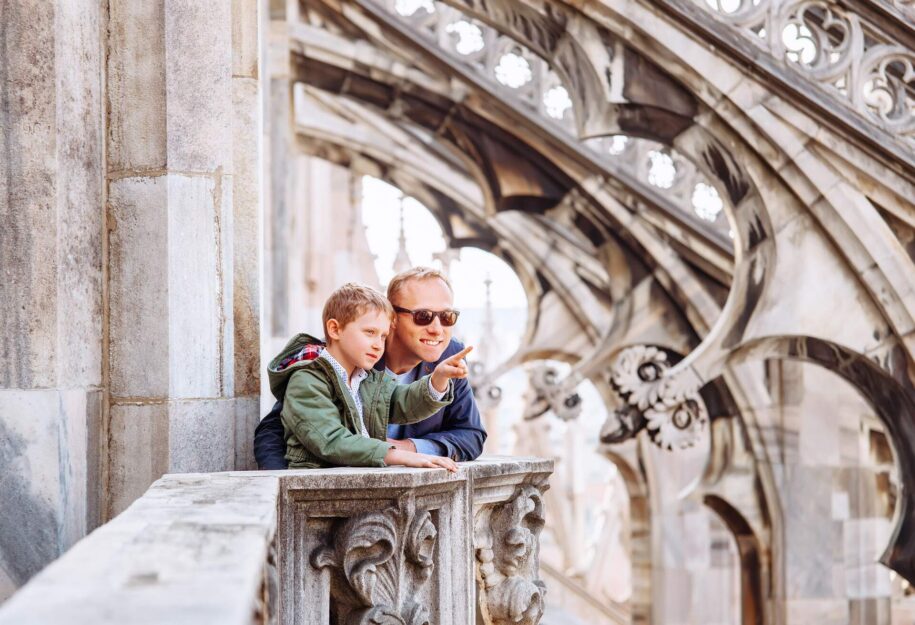
“Milan vs Rome” is one of those comparisons that looks simple on paper but becomes nuanced as soon as you factor in travel style, timing, budget, and what you want your days to feel like. Rome is built around layered history and big, iconic sights; Milan is a fast-moving city where design, business, fashion, and contemporary culture sit next to a few key historical landmarks. For tourists, that difference translates into two distinct experiences: Rome often rewards slow exploration and time on foot, while Milan is efficient and compact, with strong public transport and a “do a lot in a short time” rhythm.
For residents, the question changes again. Milan is commonly associated with career opportunities, a more “Northern European” pace, and a dense network of services; Rome can feel more spacious and scenic in parts, but often less predictable in daily logistics. Neither is universally “better”: the right choice depends on whether you prioritize ancient monuments, food and neighborhood life, shopping and style, ease of moving around, or practical considerations like rent and commute.
Below you’ll find a structured comparison designed for both visitors planning a trip and people considering a move. The aim is not to crown a winner, but to help you decide which city matches your priorities—and when it makes sense to visit both.
Table of contents
- Comparing tourism attractions in Milan and Rome
- Milan or Rome for shopping and fashion
- Living in Milan vs Rome
- Milan or Rome for students
- Travel logistics between Milan and Rome
- Is Milan worth visiting compared to Rome?
- Is Milan more expensive than Rome?
- Domande frequenti
Comparing tourism attractions in Milan and Rome
When travelers compare Milan and Rome, they often start from a checklist of sights. That’s useful, but not enough. A better approach is to consider the “density” of attractions and the type of time they require. Rome’s landmarks are numerous and spread across neighborhoods that are themselves historically significant; you can spend days moving between ruins, churches, and viewpoints, and still feel like you’ve only scratched the surface. Milan, by contrast, has fewer must-see landmarks, but they are concentrated and supported by strong infrastructure—meaning you can fit a satisfying itinerary into a shorter stay.
Historical and cultural landmarks
Rome’s appeal is anchored in antiquity and the continuous layering of eras: ancient imperial sites, medieval and Renaissance churches, Baroque plazas, and modern city life all coexist in the same urban fabric. Visiting the best-known sites typically involves planning for crowds and timed entries, but also allows for serendipity: many streets lead to smaller basilicas, courtyards, and archaeological fragments that aren’t “headline” attractions but add texture to the trip. If your ideal day includes walking between major monuments, stopping for coffee in a piazza, and ending with a sunset viewpoint, Rome aligns naturally with that rhythm.
Milan’s historical story is different. It is a city that repeatedly rebuilt itself—politically, economically, and architecturally—so its landmarks often represent civic identity and craftsmanship rather than the scale of ancient ruins. The Duomo area is the obvious focal point, but Milan’s heritage is also visible in neighborhoods shaped by industrial history, post-war redevelopment, and contemporary design. The result is a cultural experience that feels less like an open-air museum and more like a working city where history is present but not the only lens.
Art and museums
Rome excels in variety: archaeology, Renaissance painting, sculpture, and religious art can be found in both major institutions and “everyday” settings like churches. For visitors who love to connect art to context, Rome offers an almost endless supply of material—often with the added dimension of architecture and urban planning. At the same time, museum fatigue is real in Rome because the number of options is huge; it helps to plan around a few core priorities rather than trying to see everything.
Milan’s art scene is often associated with a smaller set of high-impact experiences, paired with strong temporary exhibitions and design-driven cultural programming. If you enjoy contemporary art, photography, architecture, and the crossover between culture and industry (fashion, publishing, product design), Milan tends to feel more aligned with those interests. It’s also a city where galleries, concept spaces, and design showrooms can be part of the cultural itinerary—especially during major events that bring exhibitions across the city.
Outdoor activities and day trips
Rome’s outdoors is less about “escaping the city” and more about integrating open spaces into sightseeing: scenic walks, villas and parks, and panoramic viewpoints. You can build a full day around neighborhoods and green areas, but you should be prepared for long distances on foot and varied terrain (cobblestones, hills, stairs). Day trips from Rome are often centered on historic towns and coastal or countryside destinations, with travel time that can be significant depending on the route.
Milan, meanwhile, is a strong base for day trips thanks to rail connections and geography. Lakes, mountains, and nearby historic cities can be feasible even for a short stay, which is why Milan works well for travelers who want an urban core plus quick excursions. Outdoor time in Milan itself often means well-maintained parks, canalside walks, and bike-friendly corridors. If your itinerary includes a mix of city culture and nature-driven breaks, Milan can offer a practical structure—especially when you prefer organized logistics and reliable travel times.
Milan or Rome for shopping and fashion
Shopping is one of the clearest points of divergence between the two cities, because Milan’s identity is tightly linked to fashion and design industries. Rome has strong shopping as well, but the experience can feel more “tourist-meets-local” rather than industry-centric. The better choice depends on whether you’re shopping with a specific goal (luxury items, contemporary brands, vintage, artisan goods) or simply want to browse as part of the travel experience.
Shopping districts in Milan
Milan’s shopping ecosystem is structured and specialized: luxury streets, department stores, contemporary multi-brand spaces, and neighborhood boutiques each have a clear role. For visitors, this means you can plan shopping time efficiently and pair it with sightseeing because many retail areas are close to major landmarks and transport nodes. If you’re arriving with luggage or you have a late train after checkout, the ability to move around unencumbered becomes part of the shopping experience—especially in areas where streets are crowded or where you’ll be entering multiple stores.
If you’re organizing your day around shopping and want flexibility between drop-off, browsing, and pickup, you can explore local options for luggage storage in Milan so you’re not carrying bags through crowded streets, fitting rooms, or public transport. This is particularly useful when your itinerary includes both shopping and museums or when you’re transitioning between accommodation and a departure station.
Shopping districts in Rome
Rome’s shopping is dispersed across central streets, historic neighborhoods, and modern commercial areas. The appeal is often the combination of browsing and atmosphere: you might shop near historic settings, mix international brands with Italian labels, and find artisan goods that reflect local traditions. Rome is also a city where shopping can be less linear; you can drift between streets, stop for a long lunch, and continue later. This is enjoyable, but it can require more time and patience—especially when you want to compare prices or locate specific items.
For travelers who prefer a curated approach, Rome can still be highly effective: choose one zone for luxury, another for mid-range brands, and a third for independent boutiques. The main challenge is the physical effort of moving between areas in a city with heavy foot traffic and frequent queues at key sites. In practical terms, shopping in Rome works best when you design it around your sightseeing route rather than treating it as a separate “task.”
Shopping experience and price differences
Price differences between Milan and Rome are rarely absolute; they depend more on neighborhood, brand positioning, and seasonal sales than on the city itself. That said, Milan’s concentration of flagship stores and fashion-oriented retail can make it feel more competitive on selection and availability, especially for new collections and niche designers. Rome’s strength is breadth: you can combine mainstream shopping with artisan products and souvenirs that are tied to the city’s craft traditions.
Consider also the “hidden” costs of shopping days: transport, time, and storage. If you have multiple transfers (hotel checkout, train to another city, museum visit), planning where your bags go can significantly reduce friction. Shopping becomes more pleasant when you can move quickly, take breaks, and avoid carrying bulky items for hours.
Living in Milan vs Rome
Tourism comparisons often ignore the day-to-day realities that matter to residents: commuting, service availability, neighborhood livability, and the general predictability of city life. Milan and Rome can both be rewarding places to live, but their daily “operating systems” feel different. Milan tends to be more compact and service-oriented; Rome offers larger neighborhoods with strong local identity, but the city’s scale can complicate logistics.
Cost of living comparison
In general terms, Milan is frequently perceived as the more expensive city, particularly for housing in well-connected areas. The combination of strong demand, business activity, and the concentration of jobs can push rents higher, and that affects the overall budget for newcomers. Rome’s costs can vary widely depending on neighborhood and commute time; you may find more affordable options further from the center, but transport time and reliability become part of the cost equation.
Beyond rent, consider everyday expenses that shape quality of life: commuting passes, how often you rely on taxis, the cost of maintaining a car, and the frequency with which you eat out. A city can look cheaper on paper but become expensive if you lose time and money to inefficient movement. If you’re relocating with the support of an employer or studying, those trade-offs can matter as much as the headline rent price.
Safety and quality of life
Safety is highly neighborhood-specific in both Milan and Rome, and perceptions can differ based on lifestyle (late-night commuting, tourist-heavy areas, residential zones). As a general approach, focus on practical indicators: lighting and foot traffic at night, proximity to transport nodes, and the everyday feel of streets around your home. Tourist zones in any major city can see more pickpocketing and petty scams, while residential areas may feel calmer but less connected.
Quality of life is also tied to services: how quickly you can access healthcare, administrative offices, and reliable transport. Milan’s reputation for efficiency often comes from the way services cluster around metro lines and business districts. Rome’s quality of life can be excellent when you choose the right neighborhood—especially if you value community life, scenic walks, and a slower pace—but it may require more tolerance for variability in commute and city maintenance.
Population and city size differences
Rome’s physical scale and administrative footprint shape daily life: distances are larger, and moving across the city can take longer than expected. This influences how you plan work, social life, and errands. Many residents in Rome build routines around their immediate district, treating the city as a collection of “small towns” connected by major routes.
Milan is smaller and often feels more navigable, especially for newcomers. Its urban structure supports a lifestyle where you can cross the city relatively quickly, attend events after work, and keep social plans flexible. If you’re moving for career reasons and want a city that makes scheduling predictable, Milan may feel easier. If you prioritize neighborhood identity and don’t mind structuring life around a specific area, Rome can be equally rewarding.
Milan or Rome for students
Students choosing between Milan and Rome are often balancing academic reputation, career networks, and affordability. Both cities offer strong educational ecosystems and international communities, but the “student experience” can differ: Milan is closely tied to business, design, and industry events; Rome can be appealing for humanities, arts, and the cultural intensity of living among world-famous landmarks.
Universities and educational opportunities
In both cities, the key is to look beyond the institution name and evaluate the broader ecosystem: internships, part-time opportunities, professional events, and the ability to build a network. Milan’s advantages often come from proximity to companies, fairs, and industry clusters—useful if your field benefits from regular events and networking. Rome can provide a different kind of advantage: access to cultural institutions, archives, and international organizations, depending on the discipline.
Also consider practical learning conditions: commute time to campus, availability of study spaces, and whether your program expects frequent attendance at city-based events. A student city is not only about the university; it’s also about how easy it is to build routines and manage workload without losing hours in transit.
Student life and affordability
Affordability is more than rent. In Milan, higher housing costs can be partially offset by the ease of moving around without a car and by access to services close to where you live—if you can secure accommodation near good transport. In Rome, housing may be more variable, but the city’s scale can increase daily travel time, which matters when you’re juggling classes, work, and social life.
Student life also reflects urban culture. Milan can feel “event-driven”: exhibitions, design weeks, pop-up experiences, and an international crowd moving in and out. Rome can feel “neighborhood-driven,” where social life revolves around local spots and long evenings rather than packed schedules. Think about what kind of lifestyle helps you thrive academically: high tempo and career focus, or immersion in cultural life and slower rhythms.
Travel logistics between Milan and Rome
Many travelers don’t actually need to choose. A common strategy is to combine both cities in one trip, using high-speed rail to move efficiently between them. The best plan depends on how many days you have and how you handle transit days—especially the time between accommodation checkout and departure, when luggage can become a constraint.
Distance and transportation options
Milan and Rome are well connected by rail, and for most travelers the train is the most practical option: city center to city center, frequent departures, and minimal airport-related overhead. Flights can sometimes look faster on paper, but once you include travel to the airport, security, and boarding time, trains are often competitive. Buses are typically cheaper but require more time and energy, which can reduce your effective sightseeing time.
If you’re planning a multi-city itinerary and want to simplify handoffs—especially when you have tight connections or you’re coordinating between accommodations—services like a city-to-city luggage transfer can help you travel lighter and structure the day around experiences rather than bags. This can be relevant not only for tourists, but also for residents relocating between cities or students moving at the start of term.
Best city for a weekend or city break
For a short weekend, Milan often works well because it’s compact and you can cover key highlights without feeling rushed. A two-day itinerary can combine central landmarks, a museum or exhibition, an aperitivo-focused evening, and a day trip if you’re efficient. Milan also suits travelers who prefer a modern city break: architecture, contemporary culture, and shopping with strong logistics.
Rome is possible in a weekend, but it’s more challenging if you want to see the major sites thoughtfully. The city rewards time: queues, walking distances, and the sheer number of worthwhile neighborhoods can make a short stay feel like a preview rather than a complete experience. If your travel style is to “sample and return,” Rome is fine for a weekend; if you prefer to feel you’ve truly absorbed a place, you may want at least three to four days.
Is Milan worth visiting compared to Rome?
The short answer is yes—if you understand what Milan offers and don’t expect it to replicate Rome’s historical scale. Milan’s value is often underestimated by travelers who focus only on ancient monuments. But travel satisfaction comes from alignment: Milan is worth visiting when you’re drawn to design culture, efficient city living, modern Italian lifestyle, and day trips that add variety.
Milan’s unique appeal
Milan’s identity is closely tied to work, creation, and contemporary culture. It’s a city where cafés are meeting places, neighborhoods change quickly, and cultural life includes design, publishing, and photography alongside traditional arts. For tourists, this can be refreshing: you don’t have to spend the whole day in queues; you can build an itinerary around a few key sites and then enjoy the city’s everyday elegance—parks, canalside walks, and food culture that is more about routine than performance.
If you’re planning time in the city, it can be useful to map practical needs—stations, accommodation, and where you’ll spend your days. In that sense, having a reference point for services and logistics in Milan helps you design smoother days, particularly if you arrive early, depart late, or want to combine shopping with museums.
Rome’s unique appeal
Rome’s uniqueness lies in its depth and narrative power. It is difficult to find another city where the past is so present in everyday movement: a commute can pass ancient ruins; a casual walk can reveal world-class sculpture in a church that looks modest from the outside. Rome is also cinematic by nature, with viewpoints and streetscapes that feel instantly recognizable.
For many travelers, Rome is not just a destination but a reference point for European history and art. If you’ve never been, it often makes sense to prioritize Rome at least once. The city can demand patience—crowds, transport variability, and long walking days—but it returns that investment with experiences that feel irreplaceable.
When to choose Milan over Rome
Choose Milan over Rome when your trip is short, you value efficient movement, or your interests lean toward modern culture and shopping. Milan also makes sense when you want a base that enables easy day trips and you prefer to split time between city life and nature. Business travelers often find Milan more aligned with their schedules because the city is structured for fast transitions between meetings, dining, and transport.
Rome may be the better choice when the core motivation is classical history, iconic monuments, and the feeling of walking through a living timeline. But if you’re returning to Italy and want a different perspective, Milan can balance the narrative by showing contemporary Italian identity and the way design and industry shape daily life.
Is Milan more expensive than Rome?
For many visitors and residents, the perception that Milan is more expensive has a real basis—especially regarding accommodation and rent in areas with strong connectivity. However, “more expensive” is context-specific. A short tourist trip can be pricey in either city if you stay in the historic center, eat in high-demand areas, and book last minute. Conversely, both cities offer ways to manage spending through neighborhood choices, transport planning, and seasonality.
For travelers, the biggest cost drivers are typically lodging, timed attractions, and transport inefficiencies. For residents, rent and commute time dominate. Milan’s higher housing costs can be partially offset by shorter commutes and concentrated services if you choose a well-connected area. Rome can offer more varied rental opportunities, but longer travel times and the need for additional transport can raise the “real” cost of living.
One practical angle that often gets overlooked is how pricing works in hospitality. Rates can vary significantly depending on demand peaks, events, and booking windows. If you’re planning a stay in either city—especially around trade fairs, holidays, or school breaks—understanding dynamic pricing in hotels can help you interpret price swings and choose smarter dates and booking strategies without guessing.
Domande frequenti
Is it better to go to Milan or Rome for tourism?
It depends on what you want to prioritize. Rome is often the best choice for first-time visitors to Italy who want iconic historical landmarks, layered neighborhoods, and a strong sense of continuity between past and present. Milan is often the better choice for travelers interested in fashion, design, contemporary culture, and efficient city logistics—especially for a short trip or as a base for day trips.
If you’re planning around practicalities—arrival/departure times, transfers, luggage, and how services work—you may find helpful operational details in the Baggysitter FAQ section, particularly for organizing days when you want to sightsee without carrying bags.
What is considered the prettiest city in Italy?
“Prettiest” is subjective and depends on the kind of beauty you value. Some people prefer Rome’s monumental beauty: grand ruins, dramatic churches, and cinematic streets. Others prefer Milan’s refined urban aesthetic: elegant architecture, curated public spaces, and a design-forward feel. Many travelers find that smaller cities and towns can feel “prettier” in a postcard sense, while big cities offer a more complex, layered beauty that emerges with time.
Is Milan more important than Rome?
They are important in different ways. Rome is Italy’s capital and a global reference point for ancient history, art, and political institutions. Milan is a major economic engine and an international hub for fashion, finance, and design. If “importance” means political and historical symbolism, Rome is central. If it means business influence and industry networks, Milan plays a leading role. For travelers, the relevance lies in your interests: historical narrative vs contemporary culture and industry.
Is Milan safer than Rome?
Safety varies by neighborhood and by context in both cities. Tourist-heavy areas can attract pickpocketing and opportunistic scams, while residential neighborhoods can feel calmer but may differ in late-night transport options and lighting. Rather than ranking one city as definitively safer, it’s more useful to choose accommodation in well-connected areas, stay aware in crowded places, and plan routes—especially at night. For residents, daily safety often relates to commute patterns and the immediate environment around home and transit stops.
Which city is cheaper to live in, Milan or Rome?
Many people find Rome cheaper than Milan for housing in comparable positions, but the answer depends heavily on neighborhood, commute time, and lifestyle. Milan can be more expensive in rent, yet potentially more efficient for daily movement if you live near reliable public transport. Rome may offer more varied housing prices, but longer commutes can add indirect costs. To decide, compare the full monthly picture: rent, utilities, transport, and time costs, not just the advertised price of an apartment.
Ultimately, Milan and Rome aren’t substitutes; they’re complements. If your travel plan allows, combining them offers a broader understanding of Italy: Rome for historical depth and narrative power, Milan for contemporary culture, design, and efficient urban life. The best choice is the one that matches your time, budget, and the kind of days you want to have once you arrive.
Leave a Reply