
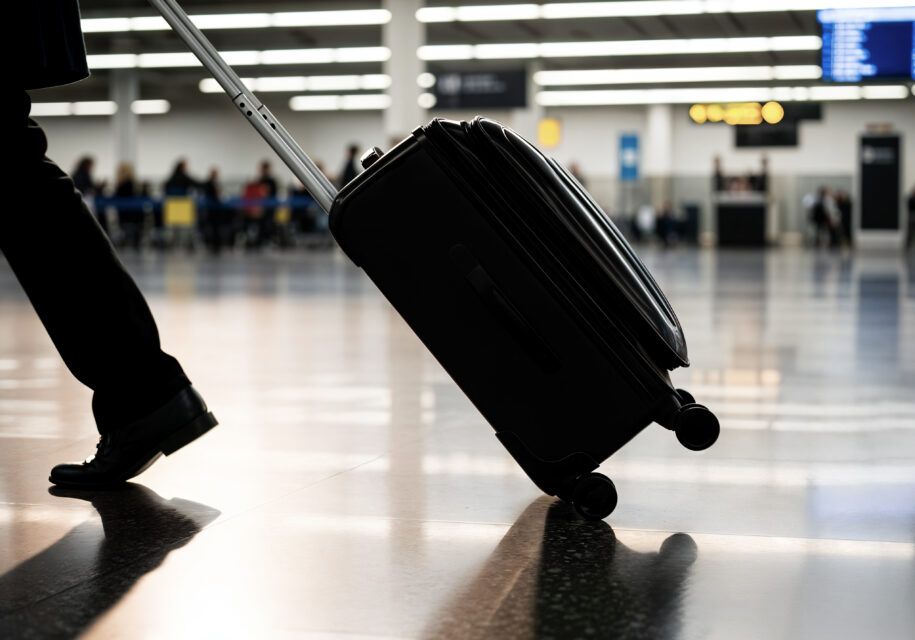
Carry-on rules look simple—until you’re at the gate, your bag is in the sizer, and the agent tells you it doesn’t fit. In 2026, the main challenge isn’t that airlines suddenly “changed everything”, but that size and weight limits vary by carrier, route, cabin class, and even fare type. Add wheels, handles, laptop pockets that bulge, and stricter boarding controls, and you have the perfect recipe for stress and extra fees.
This guide explains how carry-on size limits work in practice, the most common dimensions in cm and inches, typical weight caps in kg, TSA liquid rules, and how to translate bag dimensions into liters. Wherever exact airline limits differ, you’ll find a method to verify what applies to your ticket so you can pack with confidence.
Table of contents
- Standard carry on luggage size in cm and inches
- Carry on luggage size limits by major international airlines
- Weight limits for carry on luggage
- TSA regulations for carry on liquids and size
- Measuring carry on luggage volume in liters
- New carry on luggage size rules in 2026
- Common carry on luggage restrictions beyond size and weight
- How to choose airline approved carry on luggage
- Frequently Asked Questions
Standard carry on luggage size in cm and inches
There is no single global standard, but many airlines converge around a “typical” carry-on cabin bag footprint designed to fit in overhead bins on narrow-body aircraft. The most common reference point you’ll see in the market is 55 × 40 × 20 cm (often marketed as “international carry-on”), but airlines may allow 23 cm depth, or use slightly different height/width combinations. Importantly, airlines almost always specify that measurements include wheels, handles, and external pockets. That’s where many travelers get caught out: the shell may be compliant, while the wheels push it beyond the limit.
Typical dimensions allowed by airlines
Across many full-service and hybrid carriers, a frequent maximum size for the main cabin bag is around 55 cm in height and 35–40 cm in width, with a depth between 20 and 23 cm. Low-cost carriers may be stricter, especially on depth, and may differentiate between a “personal item” (under-seat) and a larger cabin bag that requires priority boarding or an added service. In practice, you can think of carry-on baggage as falling into three recurring categories:
- Personal item (under-seat): often around 40 × 30 × 15–20 cm, intended for a small backpack, tote, or laptop bag.
- Standard cabin bag (overhead bin): frequently around 55 × 40 × 20–23 cm.
- Expanded / “plus” cabin bag: sometimes permitted on specific fares, but may trigger extra checks because expanded zippers increase depth.
Because enforcement can depend on load factors and boarding time, even a 1–2 cm overage can matter when the flight is full and the airline is actively using the sizer at the gate.
Conversion between cm and inches for carry on size
To compare airline rules across regions, you’ll often need quick conversions. The formula is straightforward: 1 inch = 2.54 cm. Some of the most useful conversions for carry-on baggage are:
- 55 cm ≈ 21.7 in
- 40 cm ≈ 15.7 in
- 23 cm ≈ 9.1 in
- 20 cm ≈ 7.9 in
A common “international carry-on” size of 55 × 40 × 20 cm corresponds to approximately 21.7 × 15.7 × 7.9 inches. When an airline publishes a limit like 22 × 14 × 9 inches, convert each side separately and remember: what matters is the maximum for each dimension, not the total sum.
Carry on luggage size limits by major international airlines
Airlines set cabin baggage limits based on their overhead bin configurations, safety requirements, and operational choices (like reducing boarding delays). The key point for 2026 remains the same: always verify rules on the specific airline’s page for your flight, because partnerships, code-shares, and aircraft swaps can change what’s accepted. If you bought one itinerary but fly segments on different carriers, you may need to follow the most restrictive rule—especially if bags are checked at the gate for one segment.
Size rules for European airlines
In Europe, the biggest differences often appear between full-service carriers (which typically include an overhead cabin bag) and low-cost carriers (which often include only a personal item unless you purchase priority or an additional cabin bag). Another frequent variation is depth: some airlines accept 23 cm, while others target 20 cm to reduce bin congestion. If you frequently travel through European city hubs—where walking, public transport, and station stairs are common—planning a compact carry-on can make the whole trip easier.
If your itinerary includes Milan, you may also want to think beyond airline rules: traveling light makes city exploration smoother, especially if you intend to spend time walking between neighborhoods. For practical context, see how walkable Milan is and how to plan an easy city itinerary—it’s a useful lens for deciding whether a rigid roller or a soft backpack is the better carry-on for your trip.
Size limits for US and North American airlines
In the US and North America, carry-on size is often expressed in inches, and a very common headline maximum is around 22 × 14 × 9 inches (including wheels and handles). However, that “standard” isn’t universal. Some carriers publish slightly different width or depth, and enforcement can be strict at busy hubs. Additionally, aircraft type matters: regional jets and smaller planes have tighter bins, which can lead to gate-checking even if your bag is technically within limits.
When planning a multi-city trip with connections, treat carry-on compliance as a risk-management exercise. A bag that fits the mainline fleet may still be awkward on a short regional segment. If you’re doing city breaks, it can also help to streamline what you pack; an efficient capsule wardrobe and smart layering reduce the need for “just in case” items that push your bag over size. (For seasonal packing logic, you can borrow principles from these smart packing tips for every season, even if you’re not traveling to Milan.)
Asian and Middle East airline carry on size restrictions
Across Asia and the Middle East, many carriers publish carry-on size limits similar to international norms, but they may apply more explicit weight limits and enforce them consistently. Another common feature is the distinction between a cabin bag plus a personal item, with strict caps on the combined allowance. If you travel with camera gear, a laptop, or heavy electronics, you can hit the weight ceiling while still being well under the size limit. That’s why it’s critical to consider size and weight together—and to understand whether your airline counts your personal item as part of the allowance.
Weight limits for carry on luggage
Weight limits are often the more surprising constraint, especially for travelers used to airlines that focus mainly on size. Some carriers set a carry-on weight cap to reduce injuries during lifting and to protect overhead bin structures. Even when weight checks are not routine, airlines may enforce them during peak travel periods or on routes with historically high non-compliance. In practical terms, a bag that looks compact can still be “too heavy” if it’s filled with dense items (books, shoes, toiletries, tech accessories).
Common weight limits in kilograms
Common carry-on weight limits you’ll see include 7 kg, 8 kg, and 10 kg. Some airlines allow more in premium cabins, and some may specify different limits for the main cabin bag and the personal item, or a combined total. If you’re used to traveling with a hard-shell spinner, remember that the suitcase itself can weigh 2.5–4 kg, leaving you less room for contents under a 7–8 kg rule.
Variations in carry on weight by airline
Variations don’t only depend on the airline; they can depend on your fare bundle and even your departure airport if local rules or staffing drive more frequent checks. Also, don’t assume that “no one ever weighs carry-ons” will remain true: airlines adjust procedures based on operational pressure. A simple, reliable approach is to weigh your bag at home with a luggage scale and build a buffer of at least 0.5–1.0 kg for last-minute items like a water bottle (before security), snacks, or a jacket you pack at the airport.
TSA regulations for carry on liquids and size
Carry-on packing isn’t only about the suitcase itself; it’s also shaped by security rules that affect what you can bring and how you must pack it. For flights departing from the United States, TSA’s liquids rule is a core constraint: it doesn’t change your bag’s external dimensions, but it does change how you allocate internal space and which toiletry formats are practical. Other countries apply similar rules, often aligned with international aviation security standards, but details and exemptions can vary.
Size limits for liquids in carry on luggage
TSA’s well-known baseline is the 3-1-1 rule: liquids, gels, aerosols, creams, and pastes must be in containers of 3.4 oz (100 ml) or less, all fitting into one quart-size clear, resealable bag, with one bag per passenger. Medications, baby formula, and certain medical liquids can have exceptions, but they may require separate screening. Because the limits apply to the container size rather than the amount inside, half-full 200 ml bottles are still not allowed in the cabin.
How liquid restrictions affect carry on packing
Liquid rules drive practical trade-offs that can indirectly affect carry-on size and weight. For example, switching to solid toiletries (bar shampoo, soap, deodorant sticks) can reduce the need for multiple 100 ml bottles and free up space for clothing—helpful if you’re trying to avoid a larger cabin bag. Conversely, if you rely on many liquid products, you may need to allocate a rigid pouch that keeps bottles upright, which can create bulges that push a soft bag beyond depth limits. A good practice is to pack the liquids bag near the top of your carry-on for fast removal at security and to prevent “overstuffing” the front pocket.
Measuring carry on luggage volume in liters
Many backpacks and travel bags are sold by volume in liters, while airlines regulate size in linear dimensions. Understanding how liters relate to length × width × height helps you choose a bag that meets airline requirements without relying on marketing labels. Keep in mind that manufacturers may calculate liters differently (especially for bags with multiple compartments), so use liters as a planning metric, not a compliance guarantee.
Conversion between dimensions and liters
To estimate volume, multiply the external dimensions (in cm) and convert cubic centimeters to liters:
- Volume (L) ≈ (H × W × D in cm) / 1000
Example: a bag sized 55 × 40 × 20 cm has an approximate external volume of (55×40×20)/1000 = 44 L. If the depth is 23 cm, the volume becomes roughly 50.6 L. Real usable volume is usually a bit less due to rounded corners, internal frames, and pockets.
Maximum liters allowed for carry on by airlines
Because airline rules are dimension-based, there isn’t a single “maximum liters allowed”. Still, the common cabin-bag envelopes translate roughly into 35–45 L for many compliant backpacks and 40–50 L for wheeled bags depending on allowed depth. If you’re shopping for a carry-on backpack, a safe range for broad compatibility is often around 35–40 L, especially if you also need it to fit under-seat on certain flights. Always cross-check the bag’s stated dimensions against your airline’s limits—liters alone can be misleading.
New carry on luggage size rules in 2026
It’s common to see headlines about “new carry-on rules” every year. What’s verifiable and consistent is that airlines continue to refine baggage policies to manage cabin space, improve boarding times, and increase policy clarity. In 2026, rather than a single worldwide change, you should expect policy adjustments at airline level: stricter enforcement, new fare tiers with different allowances, and clearer definitions of what counts as a personal item. The practical takeaway is to treat your airline’s baggage page and your booking confirmation as the source of truth, not generic internet charts.
Upcoming changes to size and weight limits
Changes that can affect you without altering the headline dimensions include: revising what counts as “included” (for example, limiting overhead bags on basic fares), changing the allowed combination of cabin bag + personal item, or tightening enforcement of “including wheels/handles”. Some airlines also update how they handle gate-checking: you may be required to surrender the bag earlier or pay a different fee depending on when non-compliance is detected. These are operational changes, not speculation about specific carriers; the best defense is to re-check your allowance close to departure and avoid relying on last year’s experience.
Airlines implementing new carry on policies
When airlines implement policy updates, they typically publish them on official baggage pages and in fare rules, and they may communicate them during booking flow. If you’re traveling on a mixed itinerary (for example, one ticket with multiple operating carriers), pay attention to the operating carrier for each segment. If in doubt, contact the airline or check the booking portal where your ticket was issued. From an industry perspective, these frequent policy shifts are also influenced by how travel sellers and hotel partners handle visibility and ancillary services; for background on distribution dynamics, see how online travel agencies balance visibility, rankings, and profitability, which explains why add-ons and fare bundles have become central across the travel ecosystem.
Common carry on luggage restrictions beyond size and weight
Even with a perfectly sized and weighed bag, you can run into issues because of contents. Safety rules and security screening determine what can travel in the cabin, what must be checked, and what may be prohibited entirely. These rules are not only about convenience; they’re linked to aviation security, fire risk (especially batteries), and onboard safety procedures. A “carry-on compliant” setup means thinking about what you pack, not only where you pack it.
Prohibited items and safety rules
Prohibited and restricted items vary by country, but several categories regularly cause problems: sharp objects beyond permitted limits, certain tools, self-defense items, and flammables. Lithium batteries are a special case: many aviation authorities prefer or require spare lithium batteries to be carried in the cabin (not checked) with protected terminals to reduce fire risk. If you travel with power banks, camera batteries, or e-bike-related electronics, check your airline and departure country’s rules well in advance.
Carry on luggage contents rules
Some content-related rules are “soft” but practical. For example, airlines may ask you to stow a heavy bag in a way that doesn’t obstruct closing the bin, or to place certain items under the seat for taxi, takeoff, and landing. Overpacking can also create compliance issues: a soft duffel that technically meets the dimensions when empty can exceed the depth limit once stuffed, because the fabric bulges. Packing cubes help maintain shape, and distributing dense items (like chargers) into a personal item can keep the main cabin bag within both size and weight constraints.
How to choose airline approved carry on luggage
Choosing an “airline approved” carry-on is less about chasing a single perfect suitcase and more about selecting a bag that performs across different rulesets. If you fly multiple airlines per year, optimize for the most restrictive carrier you commonly use. Also consider how you move through cities: stairs, cobblestones, and crowded public transport can make certain bag styles more practical than others.
If your trip includes Milan—often a base for day trips and neighborhood hopping—you might combine a compliant carry-on with a plan for what to do between check-out and your departure time. In that context, organizing your day around indoor options can reduce how much you carry around; this guide to indoor activities in Milan (museums, shopping, rainy-day ideas) can help you plan lighter and more comfortably.
Features to comply with size limits
Look for features that reduce the risk of non-compliance:
- Rigid external dimensions (especially depth) that stay stable when packed.
- Low-profile wheels and recessed handles, because airlines measure including these parts.
- Limited expansion: expansion zippers are convenient but can push you over the depth limit.
- Weight-efficient construction: a lighter bag gives you more usable packing capacity under 7–10 kg caps.
- Separate laptop sleeve that doesn’t create a bulge on the front panel.
If you’re choosing between a spinner and a two-wheel roller, note that spinners often sacrifice internal volume and add wheel protrusions; two-wheel designs sometimes measure better against strict depth limits.
Measuring your bag correctly before travel
To measure correctly, place the bag on a flat surface and measure height, width, and depth at the maximum points, including wheels, handles, and any rigid protrusions. If your bag is soft-sided, measure it when it’s packed as you intend to travel; that’s the only way to capture bulges. For weight, use a luggage scale and weigh both your main cabin bag and personal item if your airline enforces combined limits.
A useful “reality check” is to simulate airport conditions: put what you’ll wear at the airport in the bag, then remove it and see if the bag still closes without expanding. Many last-minute issues happen because travelers pack a coat, extra shoes, or souvenirs on the return leg and exceed limits that were fine on the outbound flight.
Frequently Asked Questions
For policy questions that depend on your specific itinerary, it can help to cross-check official airline information with a reliable reference. Baggysitter also maintains a dedicated FAQ section; you can consult the Baggysitter frequently asked questions for practical travel logistics and service details.
What is the maximum carry on luggage size allowed in cm and inches?
There isn’t one universal maximum, but a widely used reference is 55 × 40 × 20 cm (about 21.7 × 15.7 × 7.9 in) for an overhead cabin bag. Many North American carriers publish around 22 × 14 × 9 in. Always confirm the exact dimensions for your airline, fare, and aircraft—especially if you fly with a personal item plus a cabin bag. For more operational details, see the FAQ page.
How strict are airlines with carry on weight limits?
Strictness varies. Some airlines routinely weigh cabin bags at check-in or the gate, while others do so only when flights are full or when a bag looks heavy. Because enforcement can be inconsistent, the safest approach is to assume the limit will be applied and to pack with a buffer. If your airline has a 7–8 kg limit, consider a lighter bag and move dense items (chargers, adapters) into a personal item if allowed—without exceeding personal-item limits.
Are carry on size limits the same for international and domestic flights?
Not necessarily. Even within the same airline, rules may differ by route, aircraft type, or fare family. International itineraries with multiple operating carriers can be especially tricky: you may need to follow the most restrictive policy among your segments. Domestic flights on regional aircraft can also trigger more gate-checking due to smaller bins.
How do liquid restrictions affect carry on luggage size limits?
Liquid restrictions don’t change your bag’s external size limit, but they affect how you pack and can indirectly influence compliance. Toiletry pouches can create bulges in front pockets; multiple bottles can add weight; and needing to keep liquids accessible can reduce how tightly you can pack the bag. Switching to solids and minimizing duplicates often makes it easier to stay within both size and weight limits.
Can carry on luggage size limits change before my flight?
Yes, policies can be updated, and enforcement practices can change without a headline “new rule.” The most practical habit is to check your airline’s baggage allowance after booking, and then again close to departure (especially if your fare allows changes or if you’ve had schedule updates). If you’re traveling during peak periods, build extra margin into both size and weight to avoid last-minute gate-check scenarios.
Carry-on compliance in 2026 comes down to three habits: measure your bag including wheels and handles, pack with both size and weight in mind, and re-check your airline’s current policy before you travel. Once those basics are covered, traveling light becomes less about restrictions and more about moving through airports and cities with fewer friction points—whether you’re connecting across continents or spending a weekend exploring neighborhoods, restaurants, and museums between check-out and departure.
Leave a Reply