
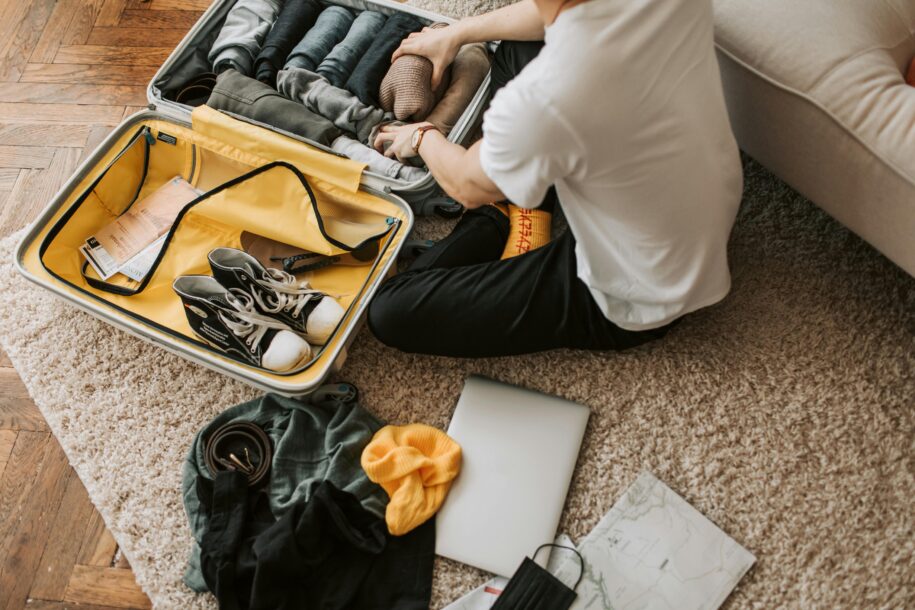
Packing efficiently is not about squeezing everything you own into a suitcase. It’s a practical skill that helps you travel lighter, keep clothes in good condition, and reduce the risk of paying extra at the airport. The goal is to balance space, weight, and accessibility: you want a suitcase that closes without strain, stays within airline limits, and allows you to find what you need without turning your hotel room into chaos.
In this guide you’ll find packing fundamentals, trip-length checklists, and specific strategies for international flights and carry-on travel. When packing is done well, it also makes your arrival smoother: you spend less time reorganizing, you move more comfortably through stations and city streets, and you’re less likely to overpack “just in case.”
Table of contents
- Packing basics to make your suitcase lighter
- How to pack a suitcase for different trip lengths
- How to pack a suitcase for international travel
- Tips to save space and keep clothes wrinkle-free
- How to pack carry-on luggage for a flight
- Frequently Asked Questions
Packing basics to make your suitcase lighter
The fastest way to pack efficiently is to treat it like a small system: choose the right container (your suitcase), define what’s essential, then use a method to compress and organize. If you skip the “system” and pack item-by-item, you typically end up with duplicates, heavy “maybe” items, and poor weight distribution that makes the suitcase harder to carry and more likely to tip over.
Choosing the right suitcase and essentials
Start with the suitcase itself. A suitcase that is too big encourages overpacking; one that is too small can force you into fragile stacks that wrinkle easily. Consider three elements: size, weight, and structure.
- Size: match it to your trip length and the kind of travel (city hopping vs. one base). If you expect frequent transfers, a medium suitcase with a functional carry-on often works better than a large checked bag.
- Empty weight: hard-shell suitcases can be protective but sometimes heavier; lightweight soft-sided bags can save weight but may offer less structure for folding.
- Internal layout: split compartments, compression straps, and a lid pocket can reduce the need for extra organizers.
Then define essentials. Efficient packing is mostly decision-making before you touch the suitcase: what you will actually wear, what you can re-wear, and what can be bought locally if needed. A useful rule is to plan outfits around a small color palette (e.g., black/white/neutral + one accent) so everything mixes easily. If you’re traveling to a city with variable weather, packing versatile layers is usually more effective than multiple bulky items. For a destination-specific approach and seasonal considerations, you can reference this guide on how to prepare luggage for Milan across seasons and adapt the logic to your own itinerary.
Finally, keep a tight “toiletries and tech” baseline. Liquids and chargers are common sources of weight creep. Instead of bringing full-size bottles and multiple gadgets, decide on the minimum set you need to function comfortably, then use travel sizes and multi-use items where sensible (for example, a moisturizer that doubles as aftershave, or a compact power adapter rather than several single plugs).
How to roll clothes to save space and avoid wrinkles
Rolling clothing works well when you need compactness and quick visibility. The key is to roll with even tension so you compress air without creating hard creases. Not everything rolls equally well, so treat rolling as one tool—not a universal rule.
A practical rolling method:
- Lay the item flat and smooth it with your hands to remove trapped folds.
- Fold sleeves or side seams inward to create a clean rectangle.
- Roll from the bottom upward with steady pressure, then place the roll seam-side down to prevent unrolling.
What tends to roll well: t-shirts, casual dresses in jersey, activewear, underwear, socks, and lightweight knitwear. What often folds better: crisp shirts, structured blazers, and linen (linen wrinkles easily regardless, but folding can make creases more predictable and easier to steam out). If you’re packing items that must look sharp, consider placing them closer to the top so they’re not crushed by heavier layers.
Using packing cubes and organizers
Packing cubes don’t magically create more space; they create order, which indirectly makes packing more efficient. When items are grouped, you avoid rummaging, you can re-pack quickly, and you reduce the “explosion effect” in your accommodation. They’re especially useful for multi-stop trips where you need to access only part of your wardrobe at a time.
Use cubes by category rather than by day. For example:
- Cube 1: tops and light layers
- Cube 2: bottoms
- Cube 3: underwear, socks, sleepwear
- Small pouch: cables, adapters, earplugs, medications
If you tend to overpack, choose cubes that are not too large. A smaller cube forces you to prioritize. Compression cubes can help with bulky but compressible items (sweaters, puffer jackets), but remember that compressing reduces volume, not weight—so airline scales won’t be impressed.
How to pack a suitcase for different trip lengths
Trip length doesn’t scale linearly with luggage. A two-week trip does not require double the clothes of a one-week trip if you plan for laundry or re-wearing. The best approach is to base your packing on activities, climate, and access to washing, then allocate a realistic buffer (usually one extra top and one extra underwear set beyond your plan).
Packing for a 3-day trip
For a long weekend, prioritize mobility and keep your “just in case” items limited. Most travelers can do a 3-day trip with a carry-on or even a personal item depending on the season. Build 2–3 outfits that share the same shoes and outerwear, then add one interchangeable layer.
A realistic 3-day packing outline:
- 2–3 tops
- 1–2 bottoms (or one outfit that can be dressed up/down)
- 1 light layer (cardigan, overshirt) and an outer layer if needed
- 3 underwear + 3 socks (+ one spare if you prefer)
- One pair of shoes on your feet + optional compact second pair if necessary
Keep toiletries minimal and decant liquids. If you’re flying, remember liquid rules for cabin bags and choose solid alternatives where possible (bar soap, solid deodorant). For city breaks where you’ll walk a lot, consider comfort-first footwear; packing an extra pair “just for one dinner” can quickly create volume and weight without adding meaningful utility.
Packing for a 7-day trip
For a week, the most efficient plan is to pack for 5–6 days and allow one re-wear day or a quick wash for underwear and t-shirts. The goal is to avoid bringing seven fully distinct outfits unless you have event-specific needs. Focus on pieces that layer and mix.
Try a capsule approach:
- 5 tops (including one nicer option)
- 2–3 bottoms
- 1–2 layers (sweater or light jacket)
- 7 underwear + 7 socks (or fewer if you plan laundry)
- 1 pair of walking shoes + 1 versatile second pair (if needed)
Pack heavier items low and near the wheels to improve balance. Place delicate or wrinkle-prone items at the top or in the lid compartment. If your trip includes a destination known for walking-friendly itineraries, keep your day bag light and organized; for example, Milan is very manageable on foot in many areas—see this guide on how walkable Milan is and what that implies for shoes and daily essentials.
Packing for a 2-week trip
For two weeks, efficient packing is mostly about laundry strategy. Either plan one mid-trip laundry (hotel service, laundromat, or sink wash for basics) or pack fabrics that dry quickly. The “two-week suitcase” becomes manageable when you treat it as a one-week capsule repeated with maintenance.
Helpful principles:
- Choose quick-dry fabrics for basics (underwear, t-shirts) so you can wash and dry overnight if needed.
- Limit bulky items to one: one warm layer, one outer layer, not multiple heavy sweaters.
- Plan outfits around activities: business meetings, hiking day, beach day, dinners—then build around overlaps.
For longer trips that include multiple climates, layering becomes more important than “one item per scenario.” A thin base layer plus a mid-layer often replaces a heavy single garment and packs more efficiently.
Strategies for packing a lot of clothes
Sometimes you genuinely need more: weddings, work trips with dress codes, or destinations where weather is unpredictable. The trick is to pack “a lot” without making the suitcase unmanageable or overweight.
Use these strategies:
- Prioritize compressible volume: knits, t-shirts, and lightweight layers compress well. Structure (blazers, stiff denim) is what consumes space and resists compression.
- Bundle similar fabrics: place soft items together to reduce friction and wrinkling.
- Use the edges: socks, belts, and swimwear fill gaps along the suitcase perimeter.
- Wear the bulkiest pieces in transit: coat, boots, heavier jeans. This reduces suitcase volume and can help with weight.
Be honest about footwear. Shoes are a major space problem because they don’t compress. If you must bring more than two pairs, choose shapes that nest (one pair inside another) and use shoe bags to keep clothes clean. Pack shoes heel-to-toe along the suitcase base for stability.
How to pack a suitcase for international travel
International travel adds constraints: different airline policies, multi-leg itineraries, longer time in transit, and sometimes stricter security procedures. Efficient international packing is about minimizing stress at checkpoints and reducing the chances of surprise fees.
Understanding luggage restrictions and weight limits
Airlines set rules for checked baggage weight and dimensions, carry-on size, and sometimes personal item limits. On international itineraries, it’s common to have a long-haul carrier followed by a regional airline with stricter carry-on allowances. That’s where travelers get caught: a bag that was fine on one leg may be flagged later.
Before you pack, check:
- Checked bag allowance: number of bags, weight per bag, and size restrictions.
- Carry-on allowance: max dimensions and weight (some airlines weigh cabin bags).
- Personal item policy: what counts as a personal item and whether it must fit under the seat.
Build your packing plan around the strictest leg of your journey. If in doubt, choose a carry-on suitcase that is known to meet common cabin dimensions and keep it under-packed enough to close easily—overstuffed bags tend to measure larger and attract attention at the gate.
Managing carry-on luggage size and weight
Carry-on packing is a tradeoff between convenience and constraints. If you keep essentials in the cabin, you’re protected against delayed checked luggage, but you must respect liquid restrictions and weight limits. To manage this well, separate items into three layers:
- Security layer: liquids bag, laptop/tablet, power bank, passport, boarding pass—placed at the top for quick removal.
- In-flight layer: headphones, snack, empty water bottle (to fill after security), sweater, eye mask.
- Contingency layer: one change of clothes and essential toiletries (within rules) in case of delays.
Keep heavy items close to the wheels or bottom to reduce strain when lifting into overhead bins. If your airline enforces weight strictly, consider that a hard-shell carry-on can consume part of your allowance before you even pack. In that case, lightweight luggage and a minimal tech kit make a noticeable difference.
Avoiding baggage overweight fees
Overweight fees are often triggered by a small margin: an extra pair of shoes, a full toiletry bag, or souvenirs added at the end. The most reliable prevention is to create a buffer: aim to pack at least 1–2 kg under your allowance if you expect to shop or bring gifts back.
Practical ways to avoid fees:
- Weigh before leaving: use a small luggage scale or a home scale (weigh yourself with and without the suitcase).
- Distribute weight: move dense items (chargers, cosmetics, books) into a personal item if permitted.
- Travel with a “return space” plan: pack a foldable tote for overflow on the way back (but ensure it fits personal item rules).
- Know your airline’s policy details: fees, thresholds, and whether you can prepay extra weight online.
If you want a clear reference point for common policy questions (including luggage rules and practical travel doubts), consult the Baggysitter FAQ on travel and luggage, which can help you orient your choices before you reach the airport counter.
Tips to save space and keep clothes wrinkle-free
Space-saving is only half the problem. A perfectly compact suitcase is not efficient if everything comes out wrinkled and requires immediate ironing. The most effective wrinkle prevention is structure: stable layers, controlled compression, and placing crease-prone items where they won’t be crushed.
Folding versus rolling clothes
Rolling tends to save space and works well for casual clothing. Folding can be better for structured garments and for creating flat layers that support each other. The best practice is usually a hybrid approach:
- Fold: dress shirts, blouses, blazers, trousers you want crisp, and items that crease in predictable lines.
- Roll: t-shirts, casual dresses, gym clothes, underwear, pajamas.
One useful technique for dress shirts is to fold them with tissue paper (or a thin layer) between folds to reduce friction and hard creases. For blazers, turning one shoulder inside out and nesting shoulders can help maintain shape, though it depends on fabric and construction.
Using space-saving packing techniques
Beyond rolling and folding, a few techniques consistently improve both space and garment condition:
- Layering: place heavier, less crease-prone items at the bottom; lighter, delicate pieces on top.
- Gap filling: fill corners and edges with socks or small items to stabilize the load and prevent shifting.
- Compression with restraint: use compression straps to keep layers from moving, but don’t crush delicate fabrics.
- Separate “clean” and “worn”: bring a laundry bag. It prevents odor transfer and keeps the suitcase organized.
For city trips that include different settings—museum days, shopping, evenings out—packing versatile outfits helps you avoid bringing multiple “single-purpose” pieces. If your itinerary includes Milan, for example, you might plan one smart-casual outfit for evening areas and one comfortable outfit for daytime exploration; these guides can help you anticipate the vibe of Brera or the atmosphere around the canals in Navigli—useful when deciding whether you truly need extra shoes or dressier layers.
How to pack carry-on luggage for a flight
A well-packed carry-on is one of the most travel-efficient choices you can make: fewer waits at baggage claim, lower risk of lost luggage, and easier transfers. The downside is that you must pack with constraints in mind and be ready for security checks. Efficient carry-on packing starts with compliance, then builds around access.
Complying with airline carry-on size limits
Carry-on size limits vary, and enforcement can be inconsistent. The safest approach is to choose a bag that fits common international standards and avoid overstuffing. Overstuffing makes bags bulge beyond the frame, which can lead to gate checks even if the base dimensions are fine.
Also consider the type of flight:
- Regional jets and low-cost carriers: often have smaller overhead bins and stricter policies.
- Full long-haul flights: may be more lenient on size but can enforce weight, especially on certain routes.
If you’re traveling with both a carry-on and a personal item, ensure the personal item is truly “under-seat sized” and not just a second cabin bag. A slim backpack is often easier to manage than a large tote because it stays stable and keeps hands free.
Packing essentials in a carry-on bag
The best carry-on is built around what you cannot afford to lose and what you need in transit. Even when you check a larger suitcase, your carry-on should cover basic resilience: a delayed checked bag is inconvenient, but manageable if you have one change of clothes and key toiletries.
Carry-on essentials typically include:
- Travel documents, wallet, keys
- Phone, charger, and any critical adapters
- Medications (always in the cabin) and a small first-aid baseline
- One clean outfit (or at least underwear + t-shirt)
- Minimal toiletries within liquid rules
- Comfort kit: headphones, eye mask, sweater, snack
Pack valuables and essentials where you can reach them without emptying the bag. Use a small pouch for cables and chargers to avoid tangles. If you’ll be walking a lot on arrival—shopping districts, museums, or long promenades—keeping your carry-on light can make a real difference. When planning outfits for a style-focused city, it can help to anticipate what you’ll do and where you’ll go; for example, if you’re considering a shopping day, this Milan Fashion District guide can inform whether you should reserve some luggage space for purchases rather than overpacking clothes from home.
Frequently Asked Questions
What is the 5 4 3 2 1 packing rule?
The 5-4-3-2-1 rule is a simple framework for building a compact wardrobe, often used for carry-on travel. It generally means: 5 tops, 4 bottoms, 3 pairs of shoes, 2 dresses (or “smart outfits”), and 1 set of accessories (jacket, bag, belt, jewelry). Variations exist, and you should adapt it to climate and dress code.
To make it practical, interpret “tops” as interchangeable layers (t-shirts, shirts, light knits) and challenge the “3 shoes” part—shoes are bulky. Many travelers do better with two pairs: one for walking and one versatile pair for evenings.
Is it better to roll or fold when packing a suitcase?
Neither is universally better. Rolling can maximize space and reduce random wrinkles in casual fabrics, while folding can protect structure and keep creases controlled in dressier items. A hybrid approach is typically the most efficient: roll soft, casual items and fold structured garments, then use organizers to keep categories separated.
Is there a correct way to pack a suitcase?
There isn’t a single “correct” way, but there are reliable principles: pack the heaviest items near the wheels for stability, keep essentials accessible, use a consistent organization system (cubes or sections), and leave a small buffer for unexpected needs. The best method is the one you can repeat quickly and that keeps you within size and weight limits.
What is the 3 5 7 rule for packing?
The 3-5-7 rule is another minimalist guideline, commonly interpreted as 3 bottoms, 5 tops, and 7 underwear sets for roughly a week of travel (or for a longer trip if you plan laundry). It works well because it reflects how most people actually dress: tops change more frequently than bottoms, while underwear is the daily constant.
To apply it effectively, choose tops that mix with all bottoms and add one versatile layer (light sweater or jacket) rather than extra single-purpose outfits.
How can I avoid baggage overweight fees?
To avoid overweight fees, plan for weight from the start and keep a margin under your allowance. Weigh your suitcase before leaving, limit heavy toiletries, and distribute dense items between checked baggage and your personal item if allowed. Also remember that souvenirs often push bags over the limit on the return trip.
For policy-specific questions and common travel scenarios, it’s worth checking the Baggysitter frequently asked questions before departure, especially if your itinerary includes multiple airlines or strict low-cost carrier rules.
Efficient packing becomes easier once you standardize your approach: a stable capsule wardrobe, a repeatable organization method, and a quick weight check before you leave. With those habits, you’ll travel more comfortably, reduce friction at airports, and keep your suitcase ready for the real point of the trip—moving freely and enjoying the destination.
Leave a Reply