
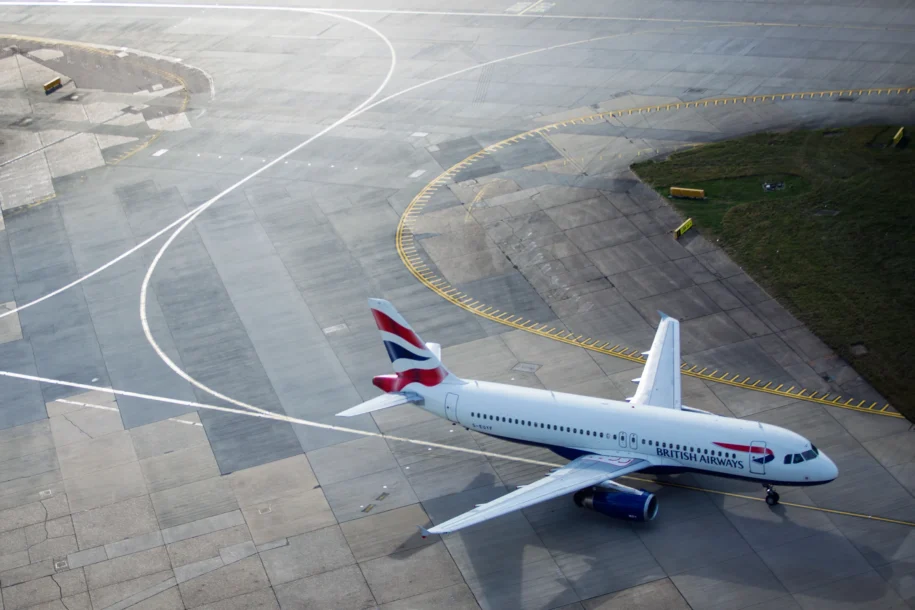
Understanding the British Airways baggage allowance in 2024 is one of the easiest ways to avoid airport stress, unexpected fees, and last-minute repacking at check-in. British Airways (BA) uses a mix of rules depending on cabin/class, route, and sometimes fare type or status; the key is to separate what’s generally consistent (like cabin-bag size rules) from what can vary (like the number of checked bags included in your ticket). This guide walks you through what to expect for Economy, how extra/overweight pricing typically works, the meaning of common phrases like “2 bags at 23kg”, and practical packing and measuring tips. Where a detail can differ by itinerary, the safest approach is to double-check the allowance shown in your booking before departure.
Table of contents
- Economy baggage allowance for British Airways
- Pricing for extra and overweight baggage
- British Airways baggage policy overview
- Tips for managing British Airways baggage
- Domande frequenti
Economy baggage allowance for British Airways
In BA Economy, your baggage allowance is usually split into two buckets: checked baggage (hold luggage) and carry-on/hand baggage (what you bring into the cabin). Even within “Economy,” inclusions may change based on your specific fare (for example, basic vs. flexible) and destination. BA is a full-service carrier, so many Economy fares include checked baggage, but it’s not safe to assume: the most reliable reference is always the allowance displayed on your e-ticket or in “Manage My Booking.”
As a traveller, you’ll benefit from thinking in scenarios: a short European city break where you want to stay light, a long-haul trip where checked luggage is essential, or an itinerary with connections where your main risk is mis-sizing or exceeding weight. When your plan is to move around a lot on arrival day (e.g., landing early and not wanting to carry your suitcase), services like baggage storage and delivery can make the difference between “waiting for check-in time” and actually enjoying the city—especially when your cabin bag is already maximized to stay within airline rules.
Checked baggage allowance on international flights
For international flights, BA’s checked baggage allowance commonly follows a “piece concept” (number of bags) plus a per-bag weight limit. On many routes, Economy passengers may have 0, 1, or more checked bags included depending on fare type, destination, and any frequent-flyer benefits. This is why two Economy passengers on the same flight can legitimately have different included allowances.
What you should verify before flying is:
- Number of checked bags included (0/1/2 etc.)
- Weight limit per bag (commonly expressed as a kg value per piece)
- Maximum dimensions for a checked bag (given as a total linear measurement: length + width + height)
If you are connecting to or from a partner airline, baggage rules can be governed by the “most significant carrier” logic for the itinerary, and that can affect which policy applies. In those mixed-carrier cases, it’s especially important to rely on your booking’s baggage information rather than generic charts.
Carry-on baggage allowance and cabin bag size
BA is relatively clear on cabin baggage: travellers are typically allowed a cabin bag plus a personal item (often called a handbag or laptop bag). The crucial part is that BA expects each item to fit within published size limits and to be manageable by the passenger (you should be able to lift it into the overhead bin when required). If you travel frequently, it’s worth choosing a suitcase designed around major airline limits to reduce the chance of being stopped at the gate.
Cabin baggage rules are a common source of confusion because different carriers use different measurements and enforcement styles. If you’re comparing policies across airlines for the same trip, you may find it helpful to review broader references like carry-on luggage size limits across airlines, so you can pick luggage that works for multiple carriers without constant re-checking.
Hand baggage weight restrictions
BA’s hand baggage is often described as having a generous approach compared with some low-cost airlines, but “generous” doesn’t mean “unlimited.” A frequent point is the relationship between size and weight: even if your bag fits the sizer, if it’s too heavy to handle safely, you may be asked to check it. This is particularly relevant when you pack dense items (books, camera gear, liquids, souvenirs) or you choose a hard-shell case that is already heavy when empty.
A practical way to stay compliant is to treat cabin baggage like a two-layer system:
- Cabin bag for bulkier but lighter clothing items.
- Personal item for the heavy essentials you cannot risk checking (laptop, medication, documents, power bank within rules).
When in doubt, weigh both pieces at home and aim for a buffer so you’re not exactly at the limit—airport scales and home scales can vary, and packed bags can shift.
Pricing for extra and overweight baggage
Extra-baggage costs are where travellers often lose the most money, because airport pricing is usually higher and options are more limited once you’re at the desk. BA generally sells additional checked-bag allowance as an add-on. The exact price depends on route, time of purchase, and sometimes the specific fare rules. The safest general strategy is to decide early whether you will need extra capacity and purchase it in advance through your booking.
Two common cost drivers are (1) extra pieces (adding another checked bag) and (2) excess weight/size (a bag that exceeds the included limit). These can stack: for example, you might be charged both for an extra bag and for that bag being overweight.
Cost of extra baggage on international flights
On international itineraries, the cost for an additional checked bag can vary widely by destination and whether you add it online in advance or at the airport. Because prices change and BA may apply different amounts by market, it’s not responsible to publish a fixed figure that could quickly become outdated. Instead, rely on these decision points:
- Buy early: adding baggage during booking or via “Manage My Booking” is typically cheaper than at the airport.
- Check fare conditions: some Economy fares allow changes or baggage add-ons more easily than others.
- Compare to shipping: for long stays, mailing a box or using luggage delivery can sometimes be competitive, especially if you’re carrying bulky items.
If you are unsure how BA compares to other airlines you fly often, seeing how different carriers handle allowances can be useful context—for instance, compare with a full guide to another network carrier like ITA Airways baggage allowance rules and fees.
Fees for overweight or oversized bags
Overweight and oversized fees are designed to discourage bags that create operational and safety issues. “Overweight” means the bag exceeds the per-piece weight limit for your fare; “oversized” typically refers to exceeding the maximum linear dimensions (length + width + height). In practice, overweight is the more common problem: travellers pack a single large suitcase rather than distributing weight across two bags.
A key nuance: if your allowance is described as multiple pieces (e.g., two checked bags), BA may still require each bag to stay under the per-bag weight limit. You generally can’t compensate by having one bag underweight and the other overweight unless the policy explicitly allows pooling (many airline policies do not).
To reduce the risk of overweight charges, focus on packing efficiency and weight distribution. You may find actionable ideas in these practical suitcase packing tips to avoid fees, especially if you tend to overpack “just in case.”
British Airways baggage policy overview
BA’s baggage policy is easiest to understand when you separate what is allowed (your free or paid allowance) from what is restricted (items and conditions). Many issues at the airport are not about the number of bags but about compliance: sharp objects in cabin baggage, liquids over the limit, batteries in the wrong place, or sports/music equipment that needs special handling.
Because rules can differ between cabin and hold—and because airport security rules are not identical to airline rules—it’s smart to treat baggage preparation as a checklist rather than a guess.
Number of free bags allowed
The number of free bags on BA is not a single universal number. It is determined by your ticket (cabin and fare), route, and any applicable frequent-flyer status or oneworld benefits. In practical terms, you should look for two lines in your booking:
- Cabin/hand baggage allowance (often shown as a cabin bag + personal item)
- Checked baggage allowance (shown as “0/1/2 bags” with a kg limit per piece)
If you’re planning a multi-airline trip, keep in mind that the operating carrier’s enforcement at the airport may be stricter than what you’re used to. Align your packing with the most restrictive segment to avoid surprises at the gate.
Weight limits explained (e.g., 2 bags at 23kg)
Expressions like “2 bags at 23kg” are common in BA and other international carriers. In plain English, it usually means: you can check two separate bags, and each bag can weigh up to 23kg. It does not usually mean you can check one 46kg bag. The operational reason is safe handling: airlines set a maximum weight per piece to reduce injury risk for ground staff and to fit handling systems.
Here’s how to use that information when packing:
- If you have heavy items (shoes, books, gifts), split them across both bags.
- Keep one bag slightly under the limit to allow for last-minute additions on the return flight.
- If travelling with a companion, don’t assume you can “average” weights across passengers unless the airline explicitly permits pooling; many do not.
When your plan includes a busy arrival day—say you land in the morning but your accommodation check-in is later—optimizing weight and number of pieces can also make city mobility easier. Carrying two near-limit suitcases through public transport is very different from having one manageable cabin bag plus a stored/delivered suitcase.
Baggage restrictions and prohibited items
Baggage restrictions are the part of travel where “common sense” is not enough. Regulations can be strict about liquids, sharp items, aerosols, and especially lithium batteries (power banks, spare camera batteries), which often must be carried in the cabin and protected from short-circuit.
To avoid confiscations or delays, review two complementary topics:
- What airlines and security typically consider items not allowed on a plane (including cabin vs. checked distinctions). A solid overview is available in this guide to prohibited items and airline rules.
- How liquid limits work in practice at security. If you travel through European airports, see carry-on liquid limits in Europe for a clear, travel-ready checklist.
Even when an item is technically allowed, packaging matters. For example, tools or kitchen knives that belong in checked luggage should be wrapped to prevent injury during inspection, and fragile items should be protected against impact.
Tips for managing British Airways baggage
Managing BA baggage well is mostly about eliminating “grey areas”: unclear bag categories, borderline dimensions, and last-minute weight surprises. A few simple habits—choosing the right bag, measuring it correctly, and distributing weight intelligently—can significantly reduce the chance of paying fees or having cabin baggage forced into the hold at the gate.
Combining a backpack and carry-on bag
Many travellers ask whether they can bring a backpack and a carry-on. BA commonly allows a cabin bag plus a personal item, and a backpack can often qualify as the personal item if it fits the size rules and can be stowed appropriately (under the seat if required). The main pitfalls are backpacks that are too tall/thick when fully packed, and travellers who also carry an extra tote or duty-free bag that pushes them beyond the allowance.
A practical setup for BA Economy is:
- Small-to-medium backpack as personal item: laptop, documents, meds, a compact liquids bag, chargers.
- Cabin suitcase for clothing and light items, leaving space for a jacket or purchases.
If you also travel with carriers known for stricter cabin limits, standardizing your kit helps. For comparison, you can check how different low-cost airlines handle cabin baggage in guides like Ryanair cabin luggage rules or EasyJet hand luggage limits, so your backpack choice stays versatile.
Measuring and weighing your bags correctly
Most baggage problems are measurement problems. Airlines measure external dimensions, including wheels, handles, and rigid corners—so a cabin bag advertised as “55 cm” may exceed limits once you include protrusions. The same applies to checked baggage linear dimensions: the tape measure should follow the widest points.
Use this home routine the day before departure:
- Measure each bag at its fullest (packed), including wheels/handles.
- Weigh each bag with a luggage scale; repeat once after adding last items.
- Stress-test the zippers and seams: overweight bags often fail at handles and zips.
If you want a bigger-picture framework that covers checked baggage, cabin baggage, fees, and the logic behind them, you can also review this complete guide to luggage restrictions. It’s useful when you’re planning an itinerary with multiple airlines and want one decision system for all of them.
Domande frequenti
Below you’ll find quick answers to the most common questions about BA baggage rules. For additional clarifications and traveller scenarios (including storage and logistics questions), you can also consult Baggysitter’s Frequently Asked Questions page.
What is the baggage allowance for the British Airways economy?
British Airways Economy baggage allowance typically includes cabin baggage (a cabin bag plus a personal item), while checked baggage can be included or not depending on the specific Economy fare and route. The authoritative allowance is the one displayed in your booking confirmation. For more traveller-focused clarifications, see the FAQ about baggage and travel logistics.
Can I bring a backpack and a carry-on on British Airways?
Often yes, as long as the backpack qualifies as a personal item within BA’s size rules and you also bring a compliant cabin bag. Keep in mind that additional items (extra tote, large duty-free bag) can cause issues at the gate. More practical examples are covered in the Frequently Asked Questions.
How many bags are free on British Airways?
There is no single number valid for every passenger: free bags depend on ticket type, route, and possibly status. Your booking shows the included pieces for cabin and checked baggage. If you need help interpreting what you see on your confirmation, the FAQ section is a good starting point.
What does 2 bags at 23kg mean for British Airways?
It generally means you can check two separate bags and each bag can weigh up to 23kg. It usually does not allow a single bag weighing 46kg. This is a common safety-based rule across carriers. Additional clarifications are available in the Frequently Asked Questions.
What are the cabin baggage measurements for British Airways?
BA publishes cabin baggage measurements and expects you to include wheels and handles when measuring. Because exact limits and enforcement can vary by aircraft and airport, the best practice is to confirm the current measurements in your booking information and to measure your bag externally at home. If you’re comparing multiple airlines for the same trip, a broader reference like this carry-on size limits guide can help you choose luggage that stays compliant across carriers. For more Q&A, see Baggysitter’s FAQ.
When you align your luggage to the strictest rules you might face on your itinerary—and you verify the exact allowance shown in your BA booking—you reduce the chances of paying last-minute fees or having items re-packed at the airport. The remaining challenge is often practical: what to do with your bags when you arrive early, have a long layover, or want to move freely before check-in. Planning that “in-between time” is part of smart baggage management, just like choosing the right suitcase size and keeping weight under control.
Leave a Reply